Ultiracer Velodrome

The velodrome,
without the velodrome.

A full track-racing simulation on the Ultiracer kiosk: Match Sprint and Keirin run under real UCI rules, with banked-track racing, speed-true drafting, and AI rivals that attack, defend, and misjudge like humans. Every watt and every line is recorded in the cloud.

Ultiracer velodrome — keirin race on the kiosk
250 m
UCI-spec virtual track
6
pace tiers — first ride to UCI speed
38%
max draft saving on the wheel, speed-scaled
100 Hz
sensor capture, streamed to the cloud

Race modes

Race the Olympic program.

Each mode is built from the UCI rulebook — distances, pacing schedules, and conduct rules included — not a loose arcade approximation.

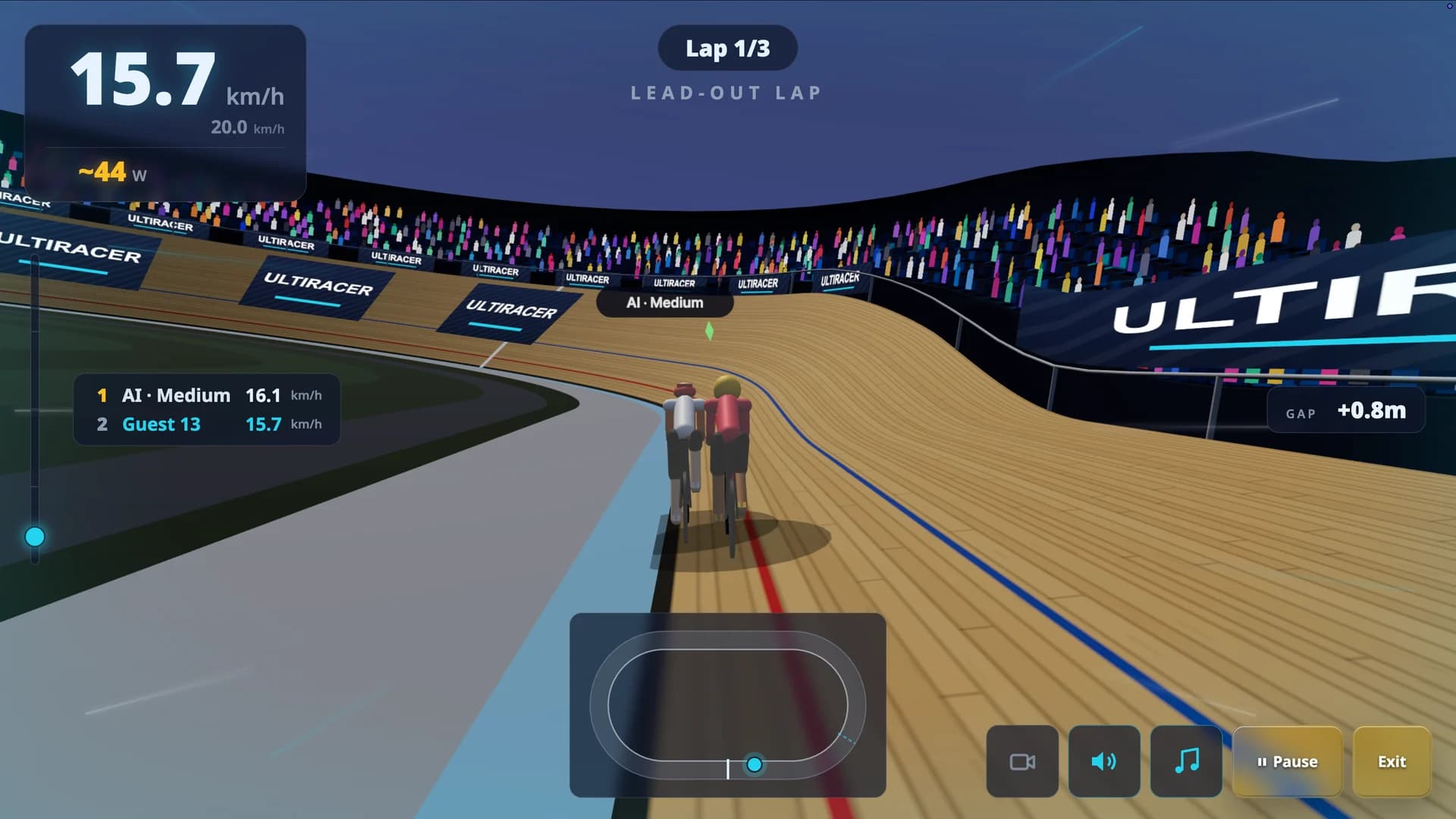
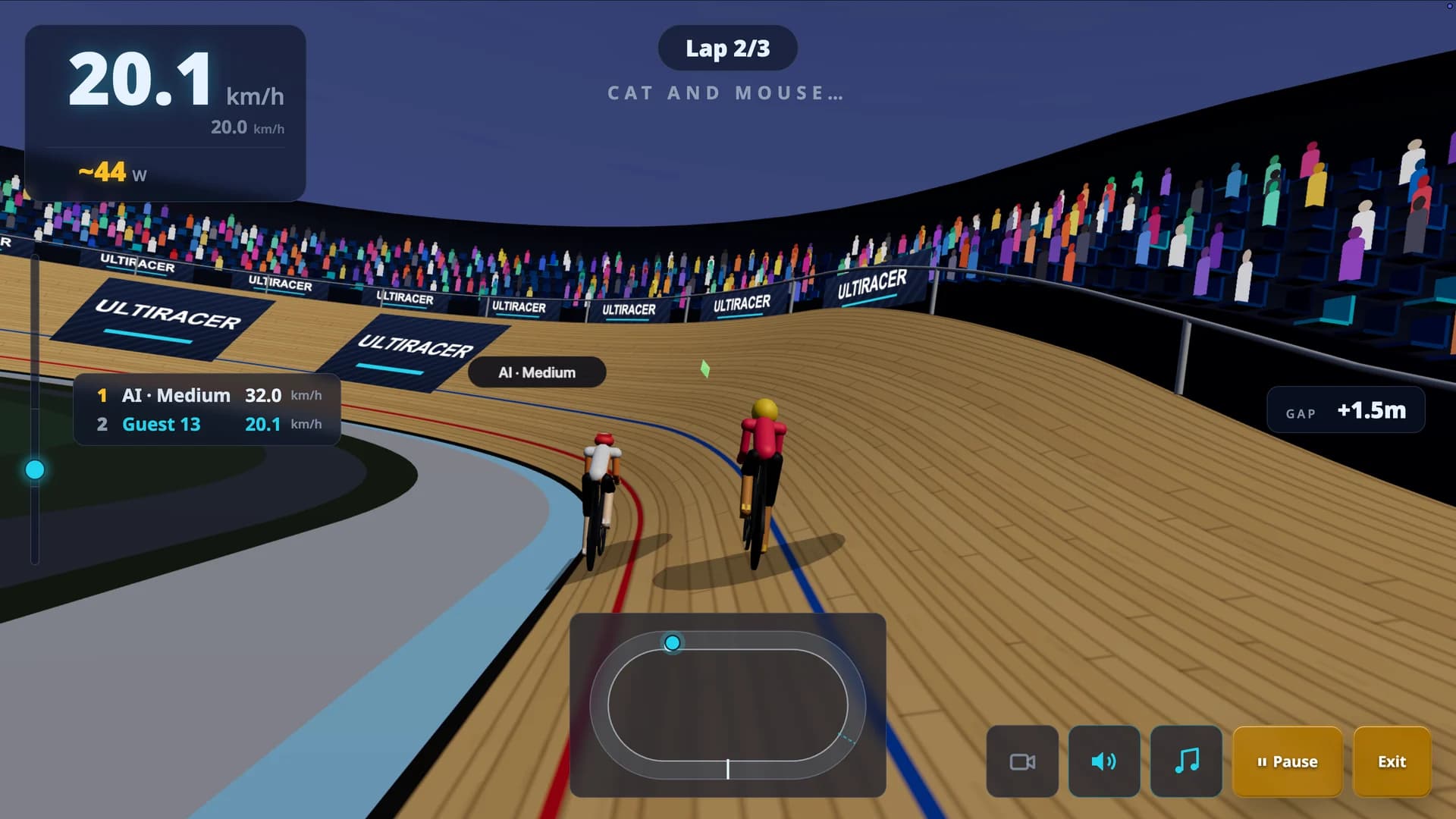
Match Sprint — track-stand standoff on the 250 m oval
UCI disciplineAvailable now

Match Sprint

The classic duel of nerve over three laps of the 250 m track. Stall, feint, and fight for position — then commit everything to the final launch. The strongest legs do not always win; the smartest ride does.

  • Three-lap sprint format on the 250 m oval
  • Cat-and-mouse tactics rewarded: control the front, or strike from the draft
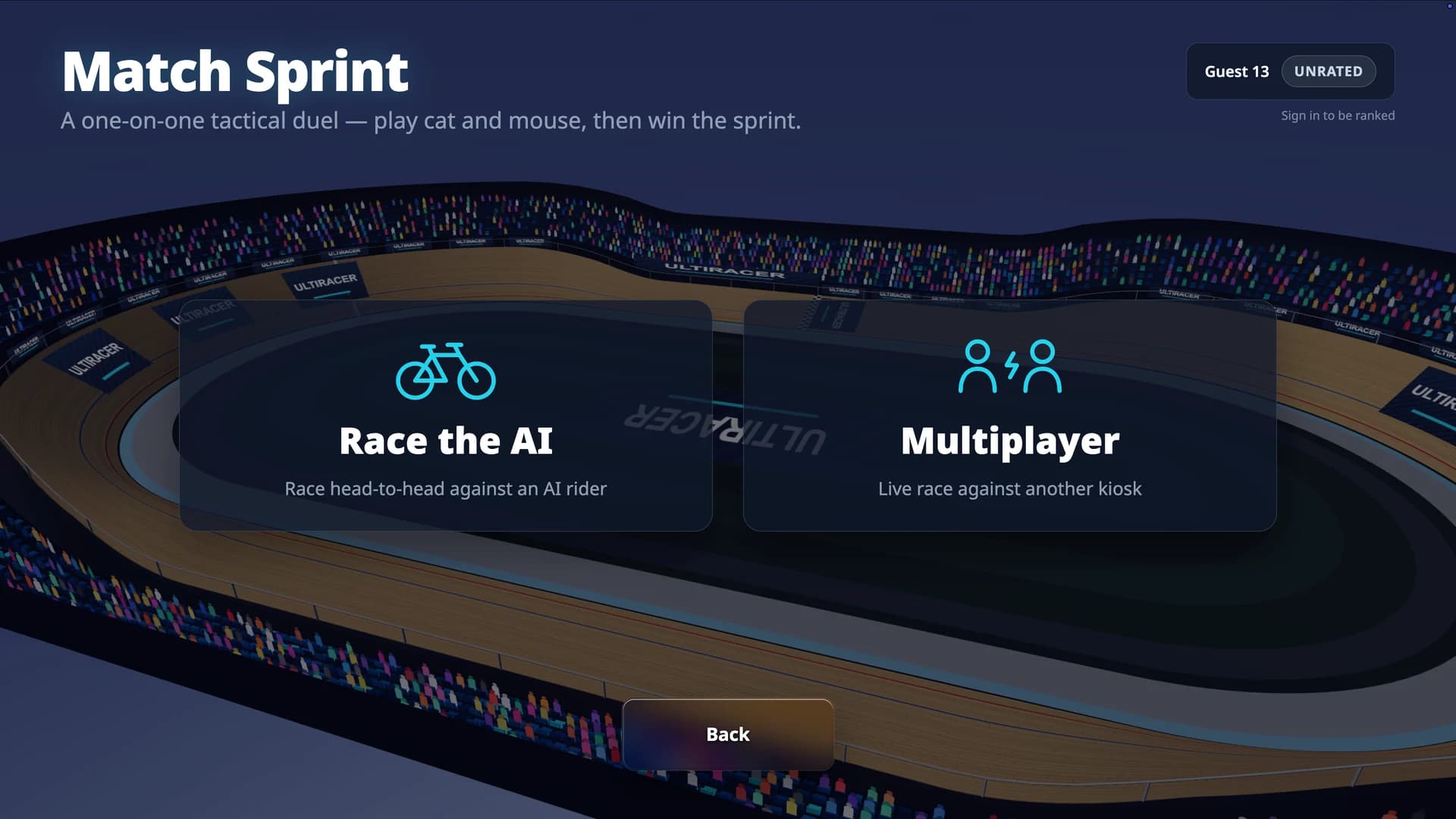
  • Live multiplayer head-to-head or against AI rivals
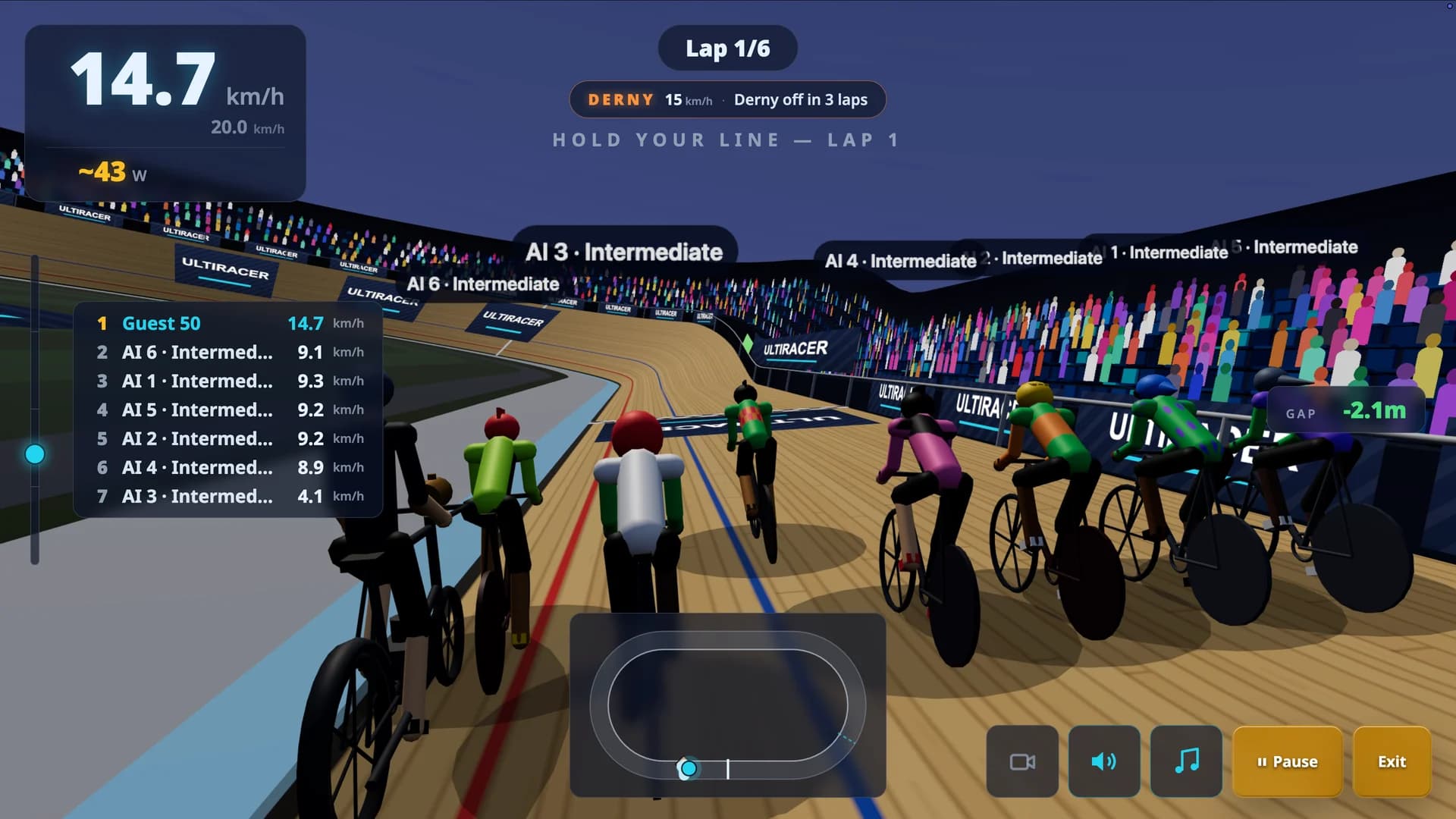
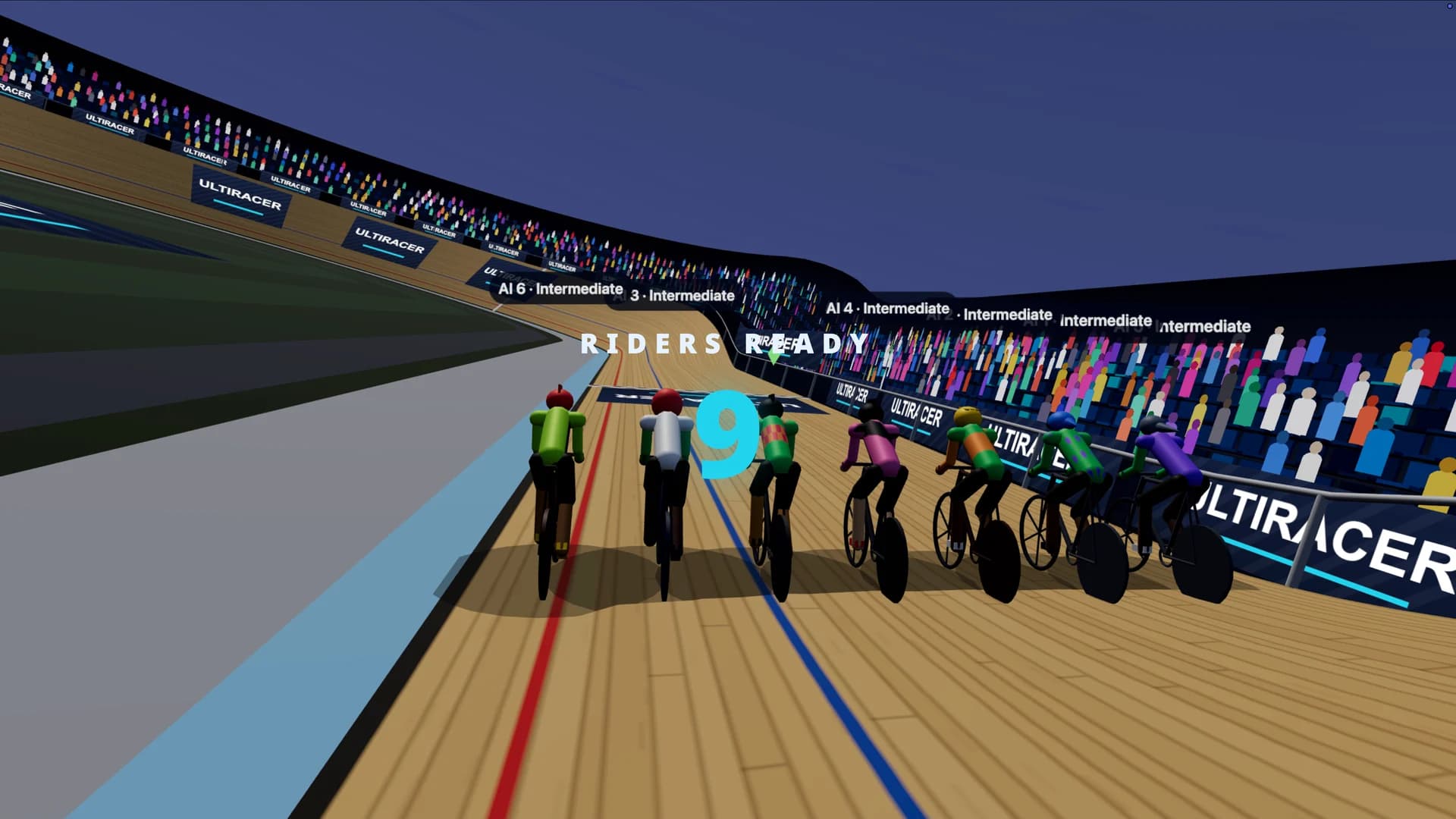
Keirin — the field riding the derny line
UCI · Olympic disciplineAvailable now

Keirin

Six laps of building chaos. Hold your position behind the derny as it winds the field up lap after lap — and when it pulls off with three laps to go, the race is on.

  • Six laps: three paced, three free — per UCI art. 3.2.134
  • Derny pacer accelerates on the official schedule, up to a 50 km/h exit
  • Official conduct rules enforced: warnings, relegation, disqualification
Coming soon
Gyeongnyun formatComing soon

Korean Keirin

The Korean professional keirin format, with its own pacing, field, and tactical culture — in development now, alongside further track disciplines.

  • Modeled on the Korean professional racing format
  • More track disciplines in active development

The mode roster is growing — the velodrome platform was built so new disciplines drop in with the same physics, rules engine, and data pipeline.

Race craft, simulated

Tactics work here, because the physics do.

Strategy on the track only matters if the simulation rewards it. Ours does — the same aerodynamic and rules logic runs on the kiosk and on the race server.

01 / 03

Drafting that obeys the physics

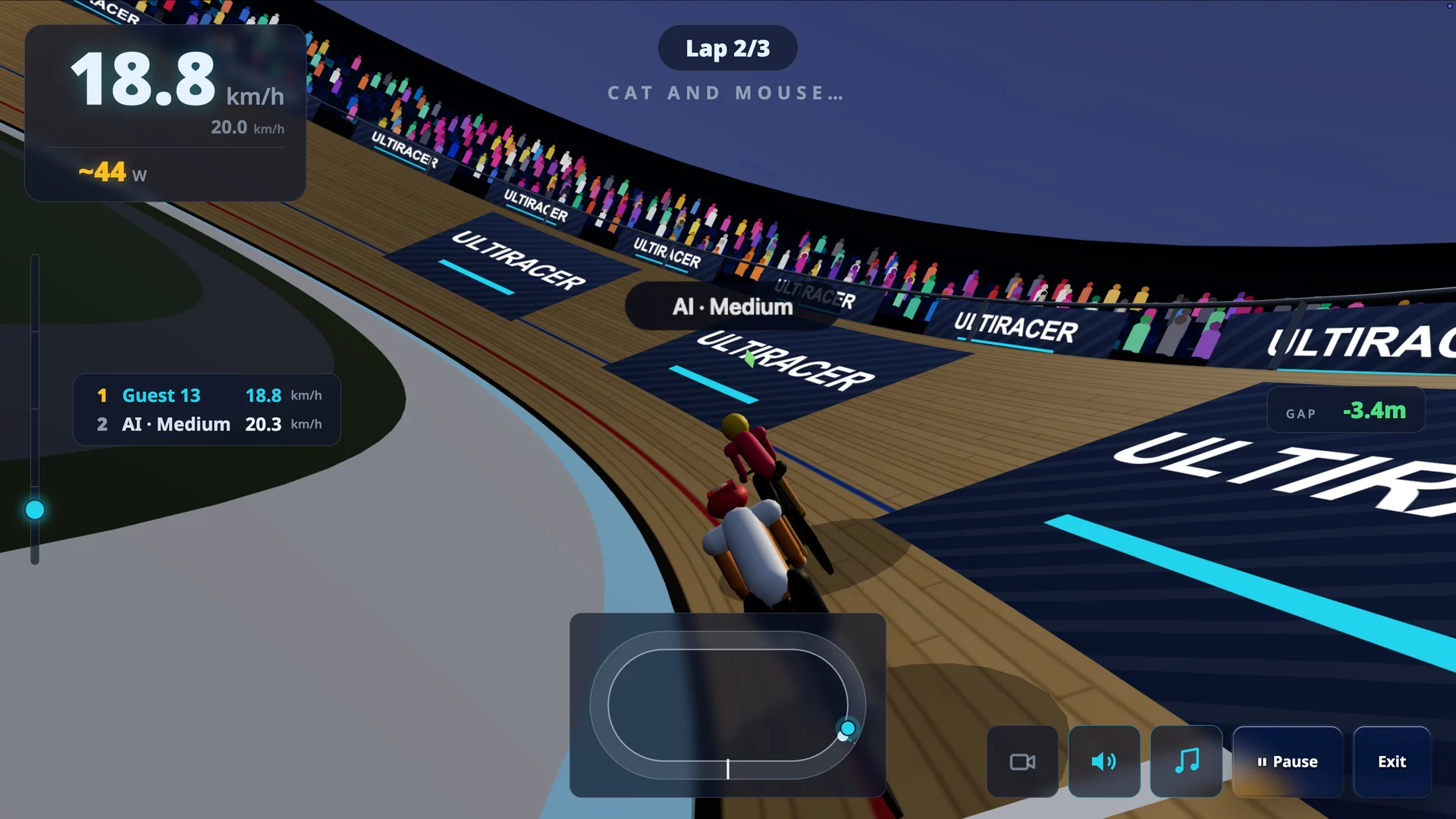
Sit on one wheel and save up to 38% of your effort — the wind-tunnel figure — but the shelter stacks down a paceline: tuck third or fourth in line and partial drafts from every rider ahead add up toward ~57%, with diminishing returns at the back, exactly as team-pursuit aerodynamics predict. Even the rider in front gains a little from a wheel glued behind. It stays speed-aware — nothing at a crawl, decisive at race pace, reaching further back the faster you go — and fades to clean air within about five bike-lengths. Gap, line, and where you sit in the train all count, so holding the wheel is a genuine skill. (Barry et al., 2015; Blocken et al., 2018; Broker et al., 1999; Kyle, 1979; McCole et al., 1990; Olds, 1998)

  • Up to 38% saved on one wheel — building toward ~57% sitting deep in a paceline
  • Partial shelter from every rider ahead stacks with diminishing returns; even the leader gains a touch
  • Speed-aware — nothing below ~14 km/h; gap and side-offset modeled continuously, fading to clean air by ~5 m
Drafting — sitting in the pocket behind a rival
02 / 03

Banked-track racing

A 250 m oval with Olympic-style banked turns, sprinter lane, and racing lines. Position on the track is a weapon: own the lane, force rivals high, and pick your moment to come down.

  • 250 m UCI-spec track geometry
  • Sprinter-lane rules enforced as in real competition
  • Lateral movement comes from your actual riding — Ultiracer hardware steers free
Banked turn — racing lines through the curve
03 / 03

AI that races like a rider, not a rabbit

Six rider archetypes — front-runner, late kicker, the physical sprinter, the tactician, and more — each with individually rolled attributes and its own decision model. They attack on slow pace, defend the lane, burn out, and occasionally get themselves disqualified.

  • Six archetypes with per-race attribute variation
  • Agent-based decisions: escapes, lane defense, sprint timing
  • AI is subject to the same rules — including warnings and DQs

Practice modes

From first ride to race pace.

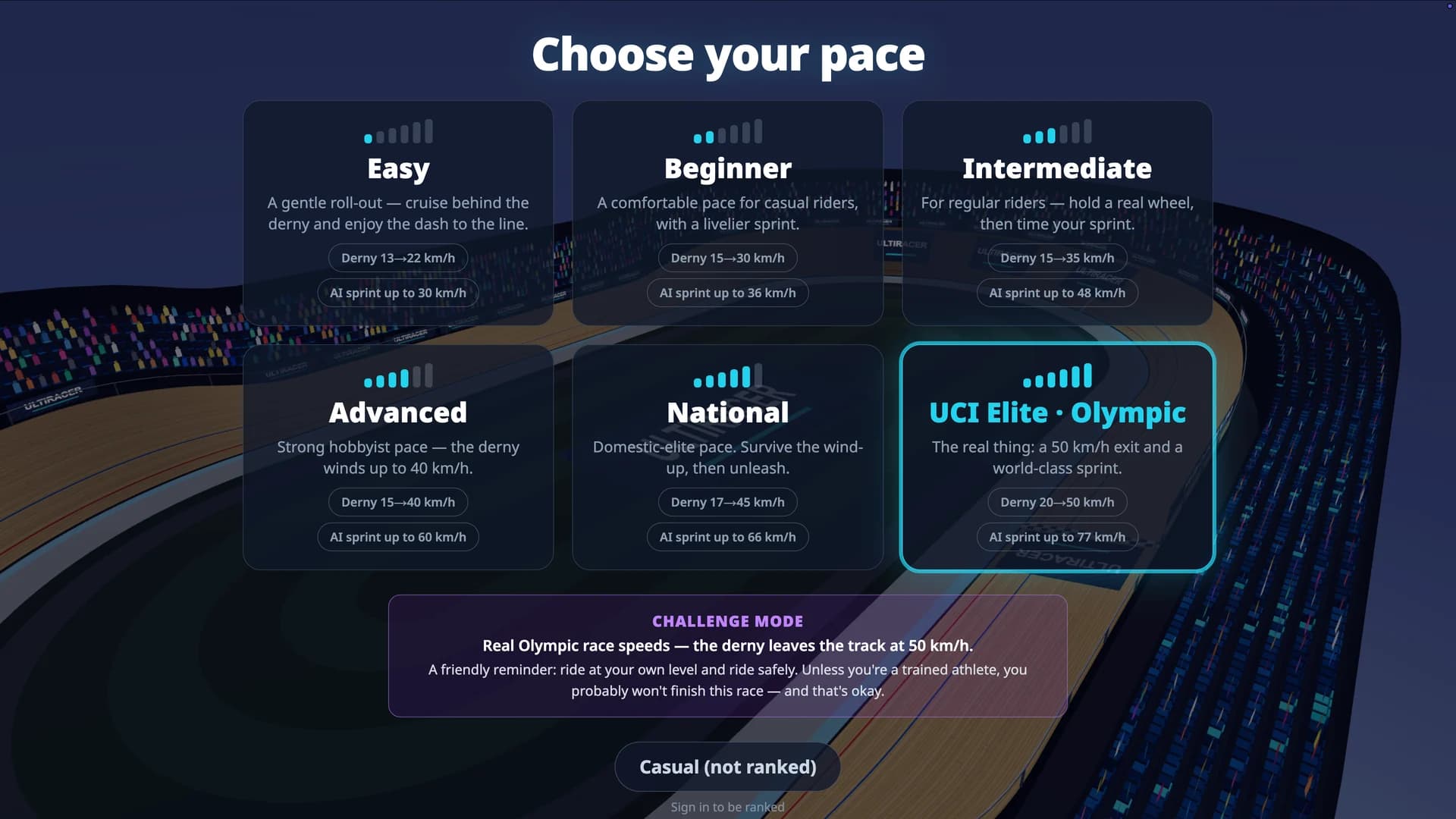
Six keirin pace tiers scale the derny schedule and the strength of the AI field. Beginners get a forgiving wind-up; the UCI tier exits the pacer at an authentic 50 km/h.

Practice modesDerny ramp
Easy18–22 km/h
Beginner22–30 km/h
Intermediate24–35 km/h
Advanced26–40 km/h
National28–45 km/h
UCI30–50 km/h

Rule enforcement scales with the tier: casual tiers get grace on infractions, while the UCI tier is judged to the letter of the rulebook.

Pace tier select screen
Live multiplayer room — riders joining a race

Compete

Race the room — or the rankings.

Live multiplayer puts riders on connected kiosks into the same race in real time, with server-side AI filling the remaining lanes so every start line is full. Ranked results feed each rider’s ELO rating, so seedings and matchups mean something.

  • Real-time multiplayer between connected kiosks
  • Per-rider ELO rating, updated after every ranked race
  • AI fills empty lanes — races always run with a full field
  • Results and standings stored with the rider’s profile

Every ride, recorded

Race data your coaches can actually use.

The kiosk streams sensor data to the Ultiracer cloud while you race — nothing to sync, nothing to lose. Review the session minutes later from any dashboard.

Speed, lateral position, heart rate, cadence, and power — captured at up to 100 Hz

Session dashboards with full ride review and trend analytics

Raw CSV export for your own analysis pipeline

Race results, ratings, and history kept with each rider profile

Put your team on the track.

We’ll set up a velodrome demo for your squad — race the modes, feel the draft, and watch the data come out the other side.