Can Heart Patients Ride an Outdoor-Style Indoor Bike? What a Cardiac Rehab Study Found
By Shaun Cheon
The short version: Cardiac rehabilitation saves lives, but treadmills and fixed exercise bikes can feel like a chore, and riding outdoors is risky for many heart patients. Doctors at Korea University Anam Hospital tested whether an outdoor-style indoor bike could fill the gap. Twenty heart patients in cardiac rehab first did a standard treadmill stress test, then rode Ultiracer, a platform that lets a real bicycle sway and tilt like it would on the road, for 10 minutes at their own pace while their breathing and heart were monitored. The ride put them at moderate-to-vigorous intensity, inside the range recommended for cardiac rehab, with no serious cardiac events, and 17 of the 19 patients who answered the survey said they were satisfied or very satisfied. Older patients, whose treadmill results were lower, reached the same absolute workload on the bike as younger ones (Lee et al., 2025). It was a small pilot, but it suggests cardiac rehab can feel a lot more like a real ride.
Why cardiac rehab needs better options
Cardiac rehabilitation is one of the most proven treatments after a heart attack, stent or heart surgery. A meta-analysis of 85 randomized trials with more than 23,000 patients found that exercise-based cardiac rehab lowered the risk of cardiovascular death by 26% and hospital admissions by 23% (Dibben et al., 2023).
Aerobic exercise is at the heart of every program, usually on a treadmill or a fixed exercise bike. Those machines are safe and easy to measure, but they do not recreate what makes outdoor exercise enjoyable: moving scenery, balance and the feeling of actually going somewhere. Outdoor cycling, on the other hand, brings traffic, falls and unpredictable effort, which makes it hard to use in a supervised program, especially for older patients (Lee et al., 2025).
The device: a real ride, minus the road
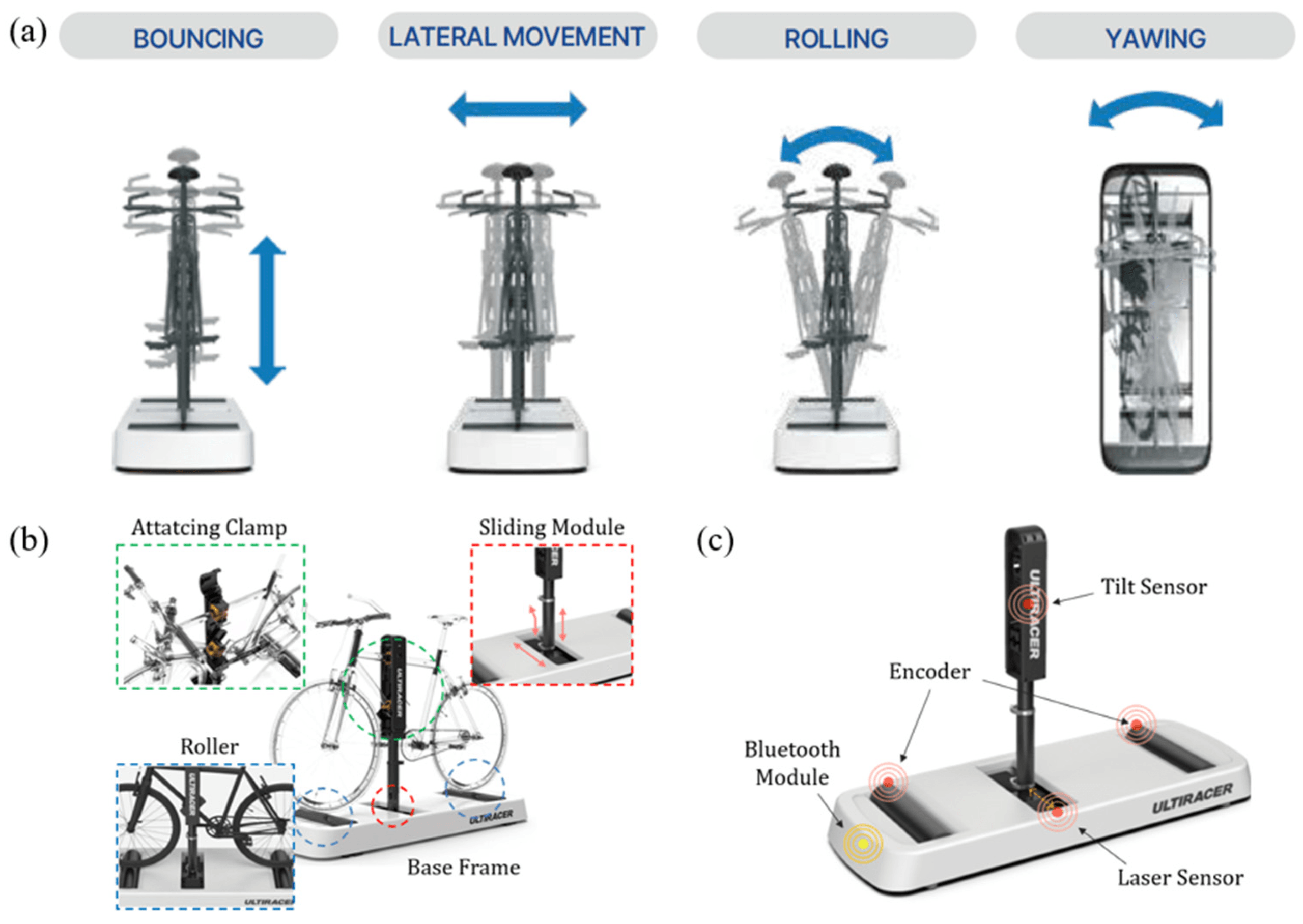
The study used Ultiracer (the paper calls it Ulti-racer P), made by RealDesignTech. A patient's bicycle clamps onto a base with front and rear rollers and a sliding module. As they pedal and steer, the bike slides up to 10 cm side to side and tilts slightly, recreating the balance and posture of riding outdoors, while a screen shows the course ahead.
What the researchers did
- Who: 20 men in the maintenance phase of cardiac rehab, average age 56, with conditions including angina, previous heart attacks, heart failure, valve disease and aortic disease. All were rated low-to-moderate risk for exercise.
- Step 1, treadmill test: each patient did a symptom-limited cardiopulmonary exercise test on a treadmill to find their peak oxygen uptake (VO2), heart rate and METs.
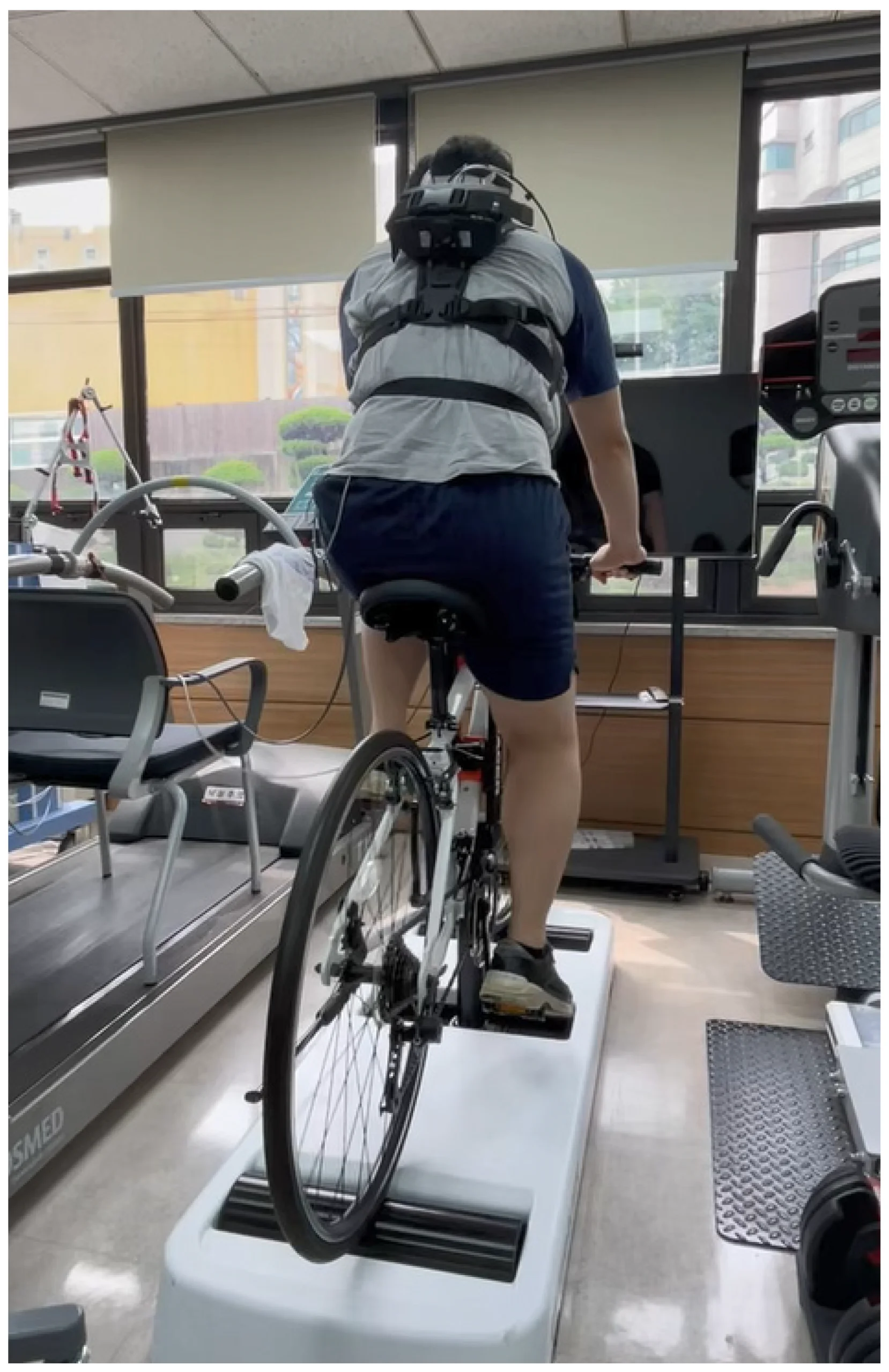
- Step 2, the ride: after 30 to 60 minutes of rest, they rode the cycling device for 10 minutes at a self-chosen pace and gear, wearing a portable gas analyzer and a continuous ECG monitor.
- Safety: a physician, nurse and physical therapist supervised every session, with a defibrillator on hand.
The team compared the ride with each patient's treadmill peak to see how hard the ride really was, and split the group by age (under 60 and 60 or older).
What they found
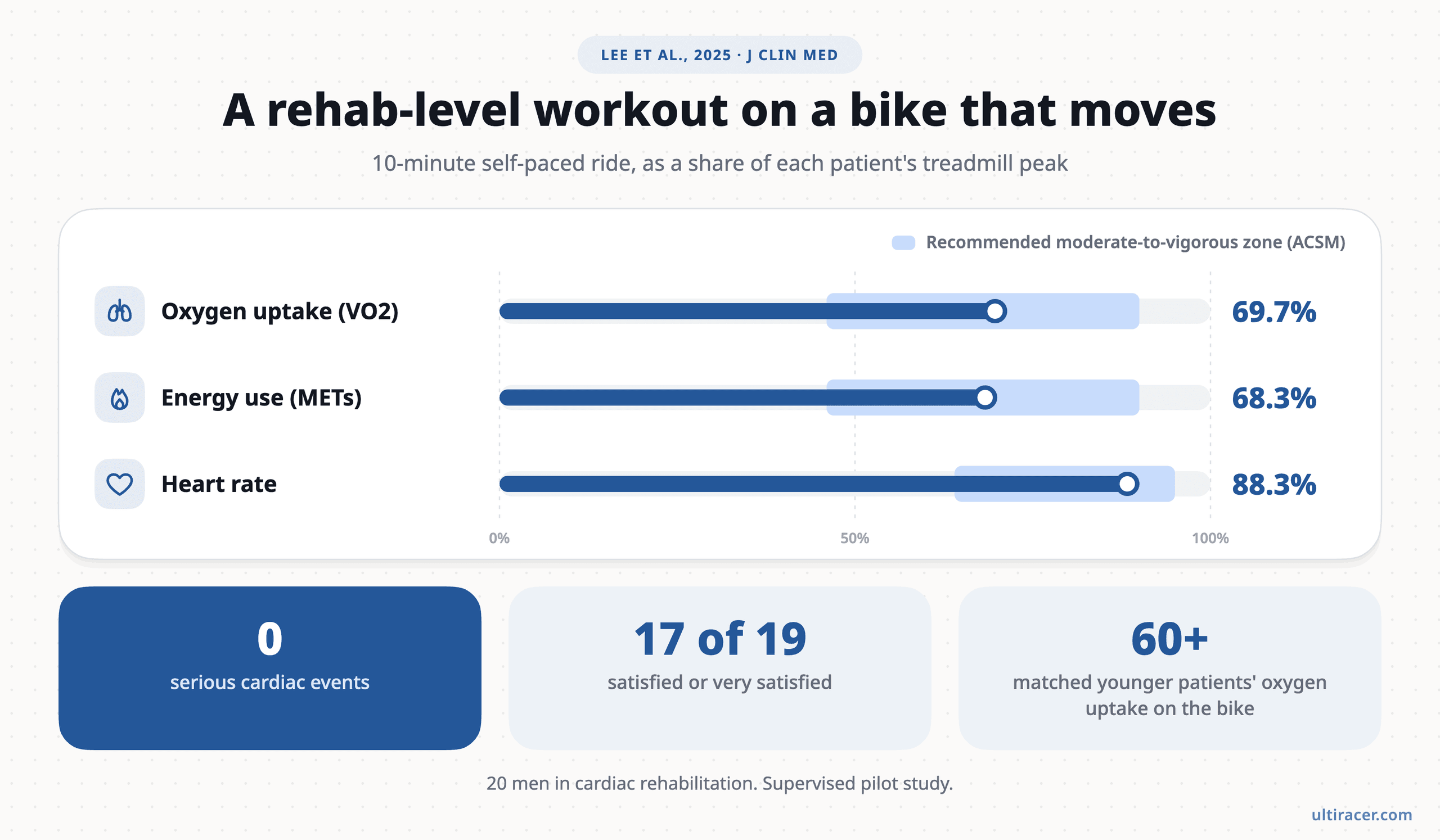
The ride hit the cardiac rehab sweet spot. On average, patients worked at:
- 69.7% of their peak oxygen uptake (19.8 vs 28.4 mL/kg/min)
- 68.3% of their peak METs (5.6 vs 8.2)
- 88.3% of their peak heart rate (135 vs 153 bpm)
- A perceived effort of 13.2 on the Borg scale, roughly "somewhat hard"
That places the ride in the moderate-to-vigorous intensity zone recommended by the American College of Sports Medicine and European cardiology guidelines for cardiac rehab (Lee et al., 2025).
Older patients kept up. On the treadmill, patients aged 60 and over reached a much lower peak oxygen uptake than younger patients (24.1 vs 31.8 mL/kg/min). On the bike, there was no difference between the age groups (20.0 vs 19.6 mL/kg/min). In other words, the older group worked at a larger share of their capacity. The authors suggest cycling puts less strain on balance and joints, so older patients may be able to push harder without feeling unsteady.
No serious safety problems. There were no dangerous heart rhythms, atrial fibrillation or heart block, only minor ectopic beats in a few patients that caused no symptoms. Nobody fell or got hurt.
Patients liked it. Of the 19 patients who completed the survey, 9 were very satisfied and 8 were satisfied. The features they valued most were balance and whole-body training (70%), usefulness for rehabilitation (65%), novelty (35%) and how much it felt like riding outdoors (30%). The one complaint was pedal discomfort.
What this means for cardiac rehab programs
The study was a small, single-center pilot with only male patients, one 10-minute session per person and supervision throughout, so it does not yet show long-term results or safety for higher-risk patients. Anyone in cardiac rehab should follow their care team's exercise prescription. Within those limits, the findings point to three opportunities:
- A new exercise option within the target range. The ride delivered a workout in the intensity range rehab teams aim for, using a patient's own bike and pace.
- A better fit for older patients. Because the bike reduces impact and fear of falling, older patients reached the same workload as younger ones.
- More engagement, which matters. Programs only work when patients keep coming back. An experience that feels like a real ride, trains balance too and is fun to repeat could help with that, a question the authors flag for longer studies.
This study completes our three-part look at research using Ultiracer. Catch up on the first two: an AI that spotted early Parkinson's from a 30-second ride, and what cycling reveals about balance in Parkinson's.
Make rehab feel like a ride
Ultiracer brings the sway, lean and steering of outdoor cycling indoors, keeps riders safe from falls and records how they move. If you run a cardiac rehab program, hospital, clinic, fitness center or wellness center and want to see how Ultiracer could fit into your sessions, get in touch with us for a demo or to talk about a research collaboration.
References
- Dibben, G. O., Faulkner, J., Oldridge, N., Rees, K., Thompson, D. R., Zwisler, A.-D., & Taylor, R. S. (2023). Exercise-based cardiac rehabilitation for coronary heart disease: A meta-analysis. European Heart Journal, 44(6), 452-469. https://doi.org/10.1093/eurheartj/ehac747
- Lee, J. T., Kim, B. R., Pyun, S. B., Kim, Y. M., Son, H. S., Jung, J. S., & Kim, H. J. (2025). Feasibility and safety of an outdoor-simulated interactive indoor cycling device for cardiac rehabilitation: A pilot validation study. Journal of Clinical Medicine, 14(24), 8947. https://doi.org/10.3390/jcm14248947