Ultiracer at 88RUN 2026: Warm-Ups and Cool-Downs for Runners
By Shaun Cheon
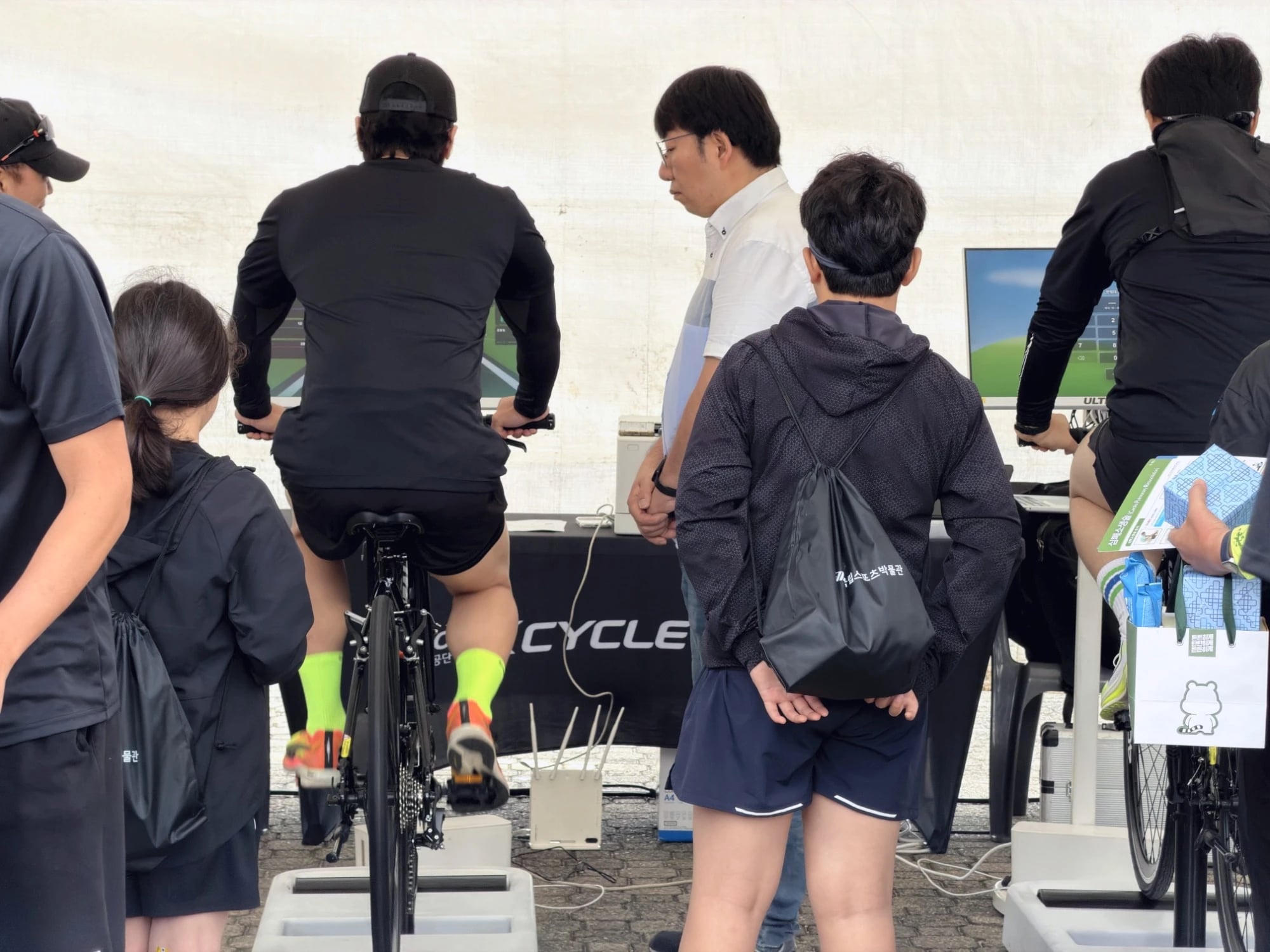
On Saturday, 12 September 2026, Ultiracer brought two bikes to 88RUN, the marathon festival that KSPO held at Misa Boat Racing Park in Hanam, just east of Seoul, to mark 38 years since the 1988 Seoul Olympics. Runners hopped on to warm up before the start and to cool down after the finish, and visitors of every age joined them, from 10-year-olds to riders in their 70s.
About 88RUN 2026
88RUN, shown on the event banners as 서울올림픽·패럴림픽기념 MARATHON 88RUN, was organized by the Cycle and Boat Racing Headquarters of the Korea Sports Promotion Foundation (KSPO), the organization behind KCYCLE and KBOAT. Its slogan, "88하게 다시 뛰는 대한민국, 기록을 넘어 추억을 뛰다", plays on the Korean word for "full of life" and roughly means "a lively Korea runs again: beyond records, running for memories" (StarNews).
The venue itself is part of the story. Misa Boat Racing Park hosted the rowing and canoe events of the 1986 Seoul Asian Games and the 1988 Seoul Olympics (The Fact). In honour of 1988, the organizers opened 1,988 places across a 10 km course, a 5 km course and a family run, and pitched the day as a festival for families, friends and couples rather than a race for records (StarNews). According to the official 88RUN site, runners gathered at 7:30 a.m., the opening ceremony began at 7:40, the 10 km field was scheduled to start at 8:30 and the 5 km field at 8:50.
About 3,500 runners and family members took part. At the opening ceremony, an original 1988 Olympic torch appeared, and KSPO Chairman Ha Hyung-joo, the 1984 Olympic judo champion, lit the flame together with a child running a first-ever race and young athletes from Hanam. After the races, families enjoyed bubble and magic shows, a prize draw and hands-on sports zones, and KSPO presented KRW 37.6 million in training support to Hanam's young track athletes (The Fact). Chairman Ha called 88RUN "a meaningful occasion to share the emotion and values of the 1988 Seoul Olympics with the public and pass them on, whole, to future generations."
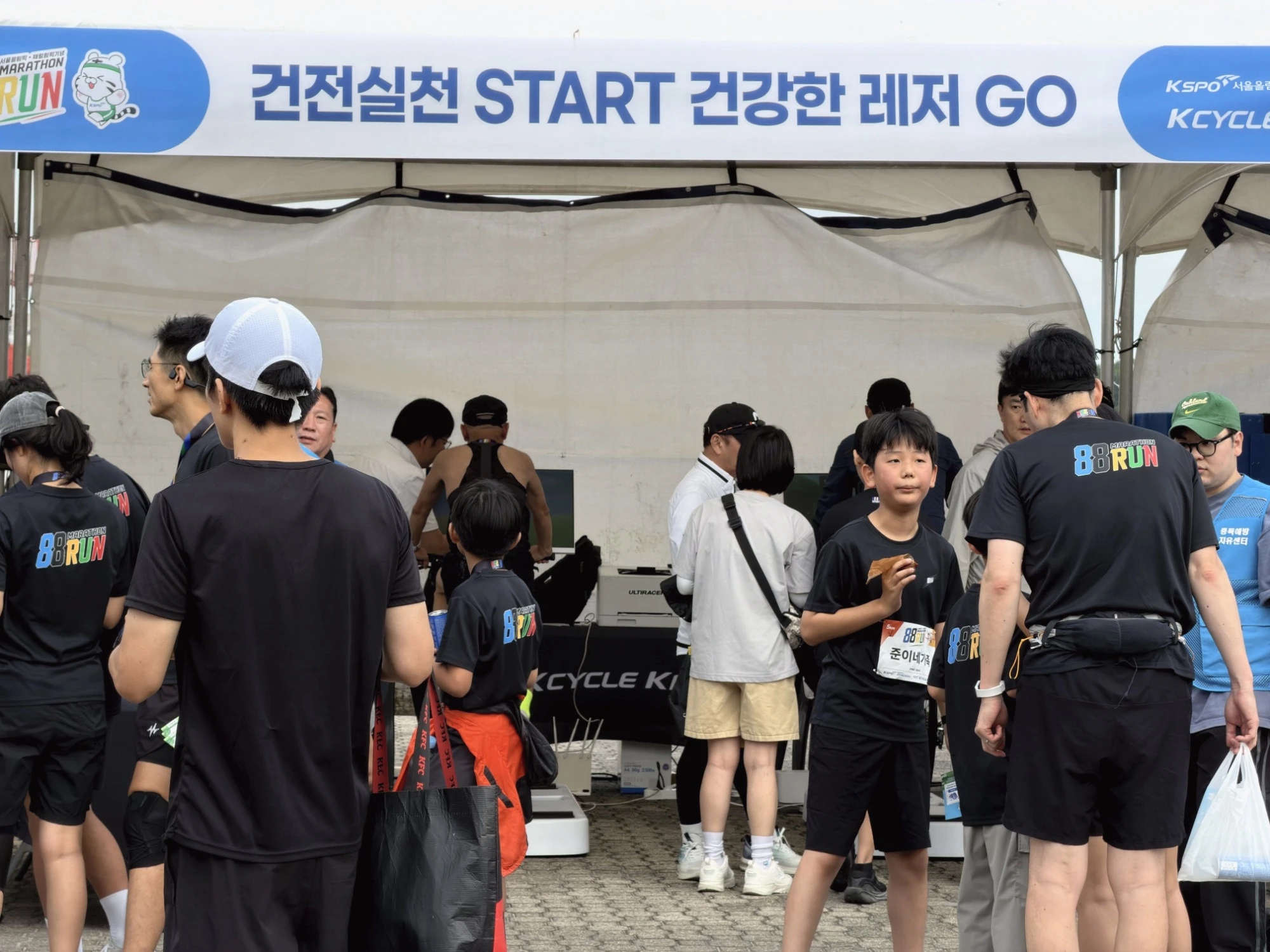
Two Ultiracer bikes at the KCYCLE·KBOAT booth
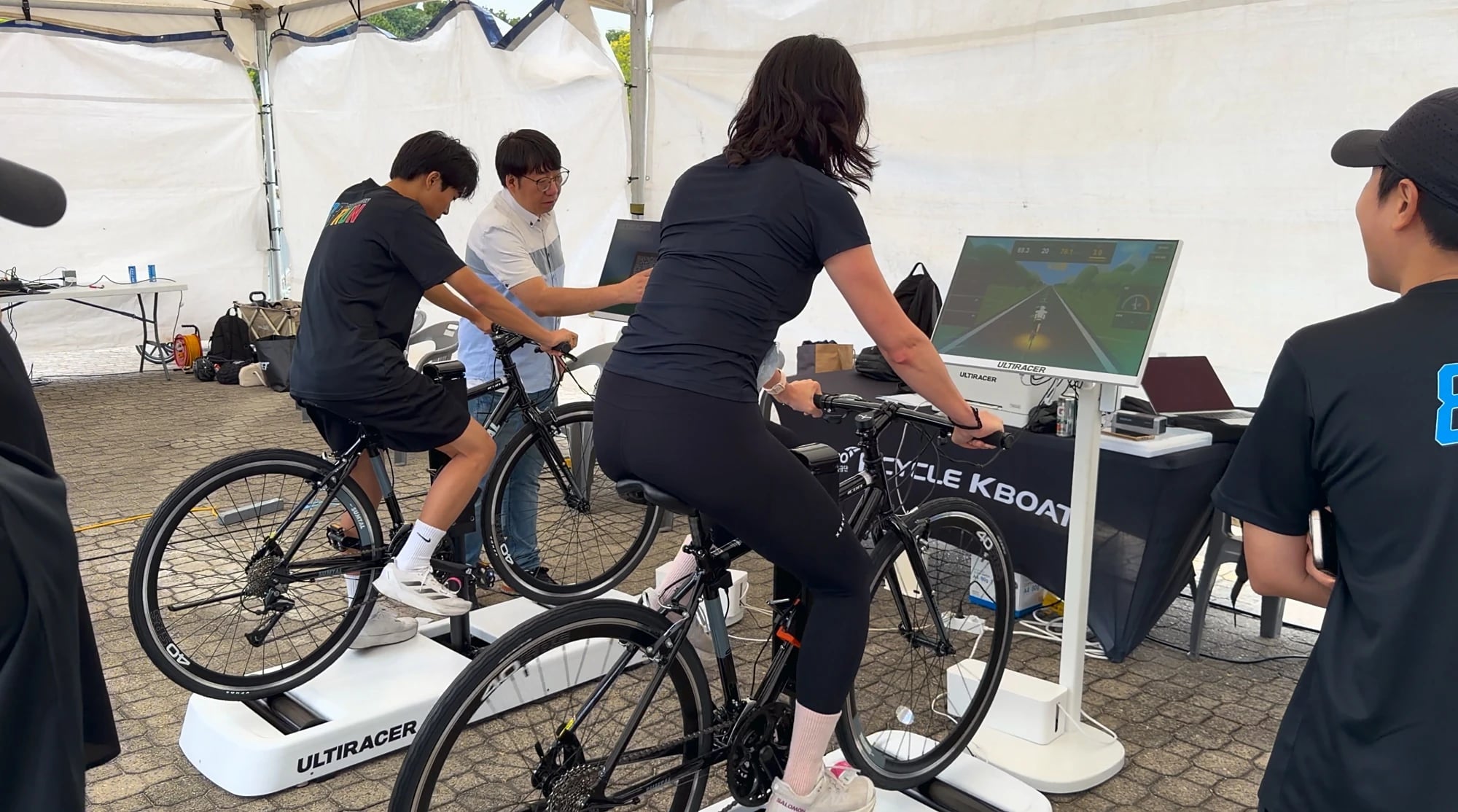
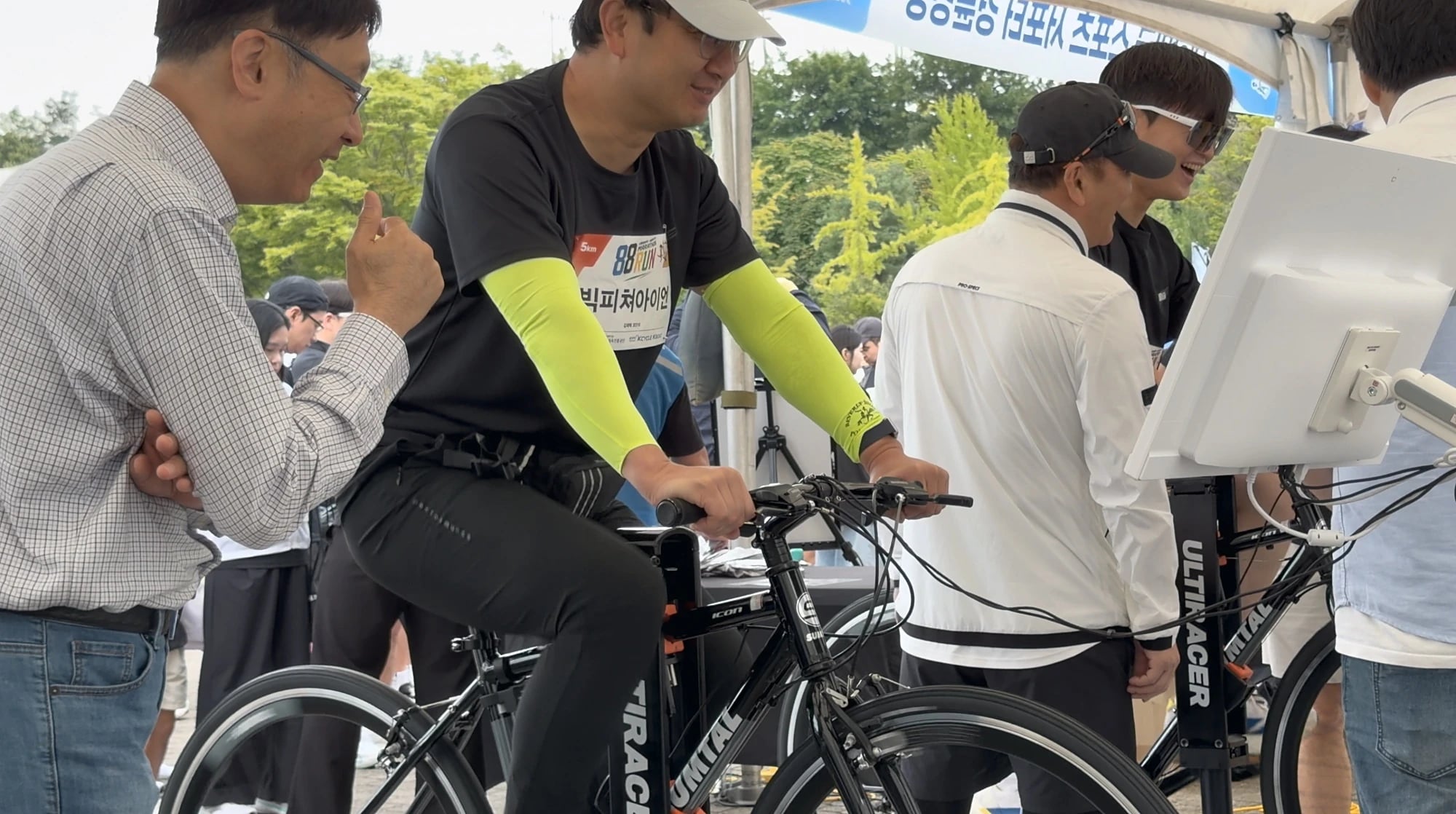
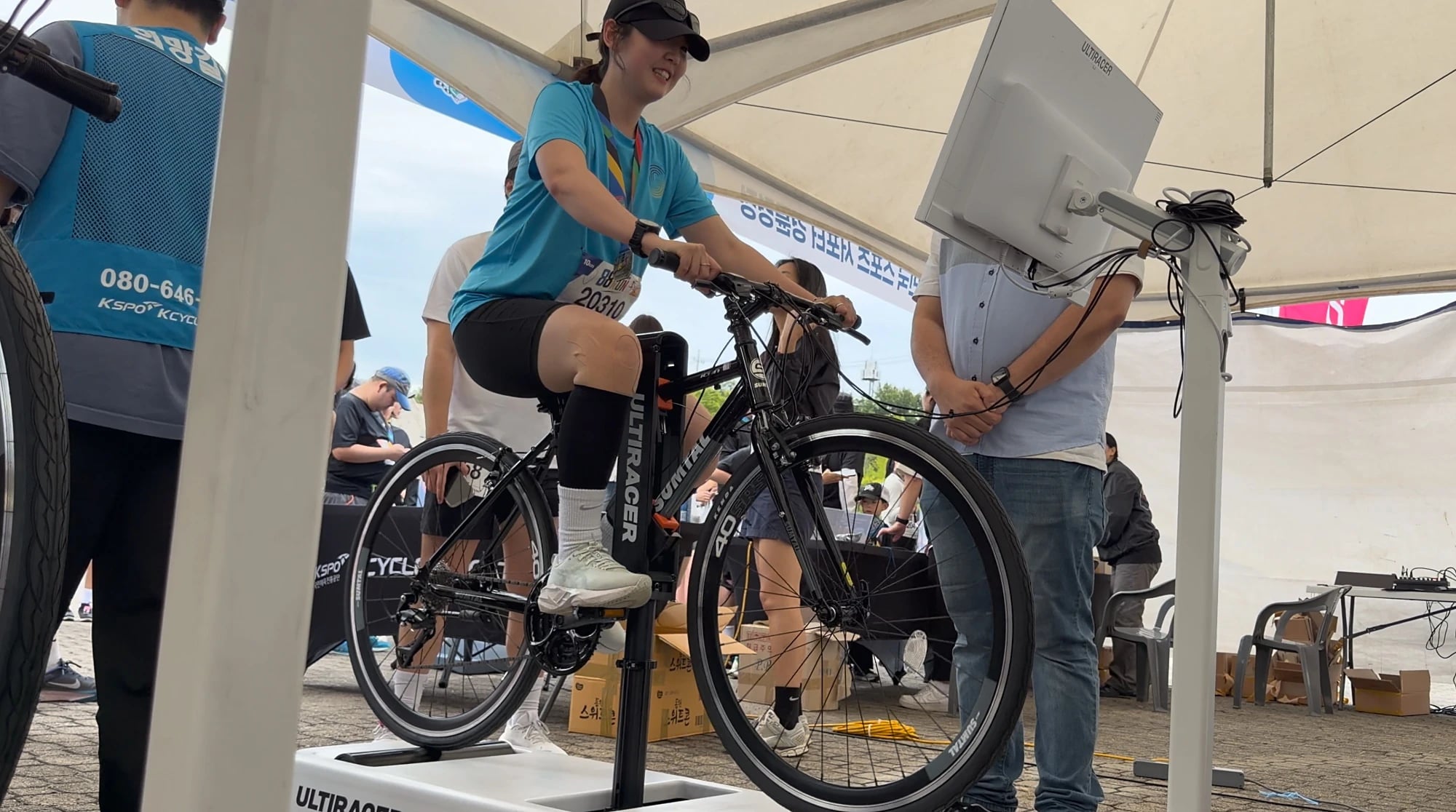
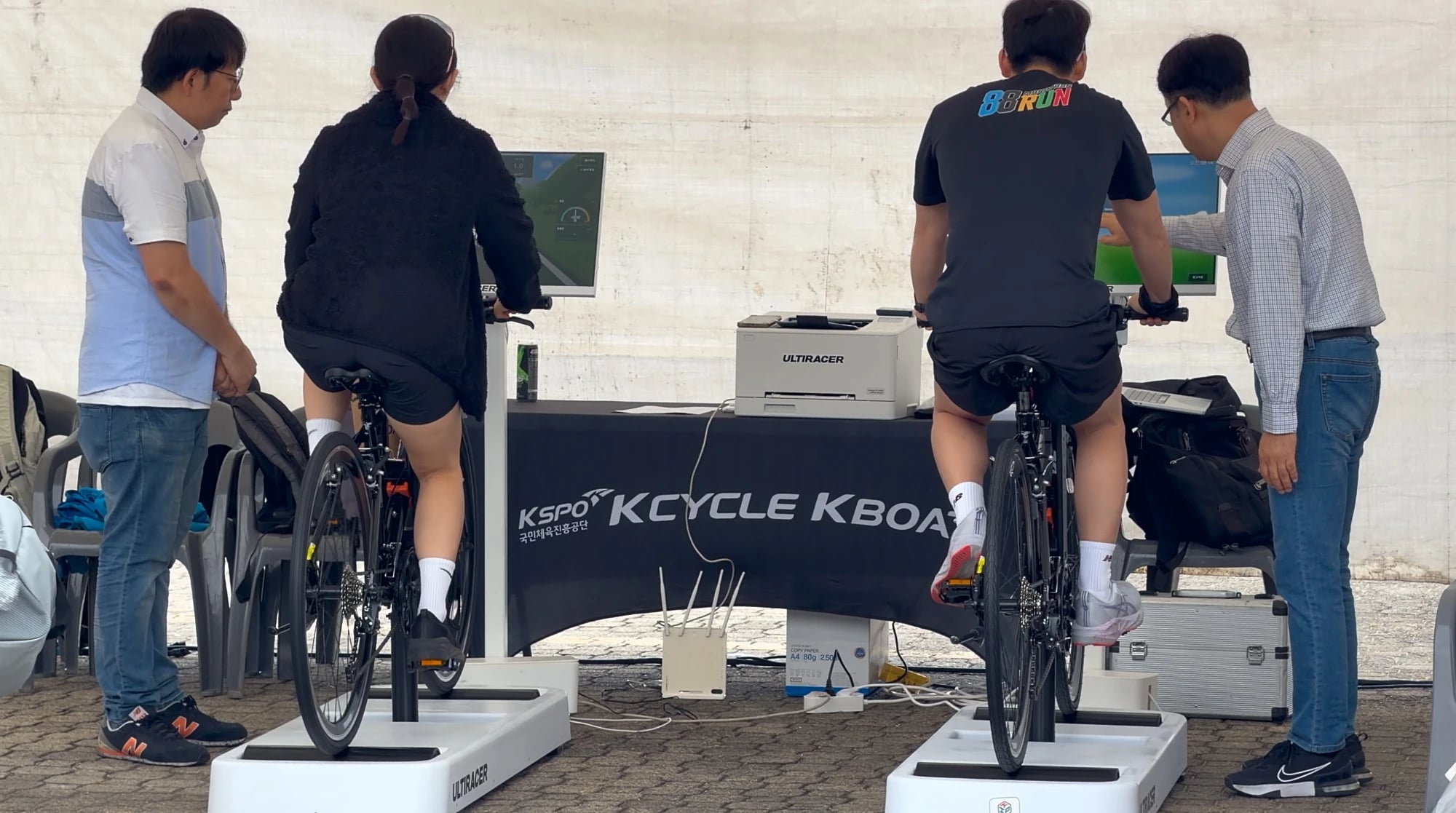
The official program listed a bike experience in the KCYCLE·KBOAT zone, and that is where our two bikes stood. Ultiracer is a real bicycle on a platform that lets it sway, lean and steer like a bike on the road, while the platform keeps the rider from falling. Most visitors rode Perfect Racer, our 30-second balance game: keep the bike in the middle of the road on screen, and the steadier you ride, the farther you go. Each ride lasts just 30 seconds at an easy pace, which makes it a natural fit before or after a run. Some riders also tried Velodrome, an on-screen track race, often against the rider on the next bike.
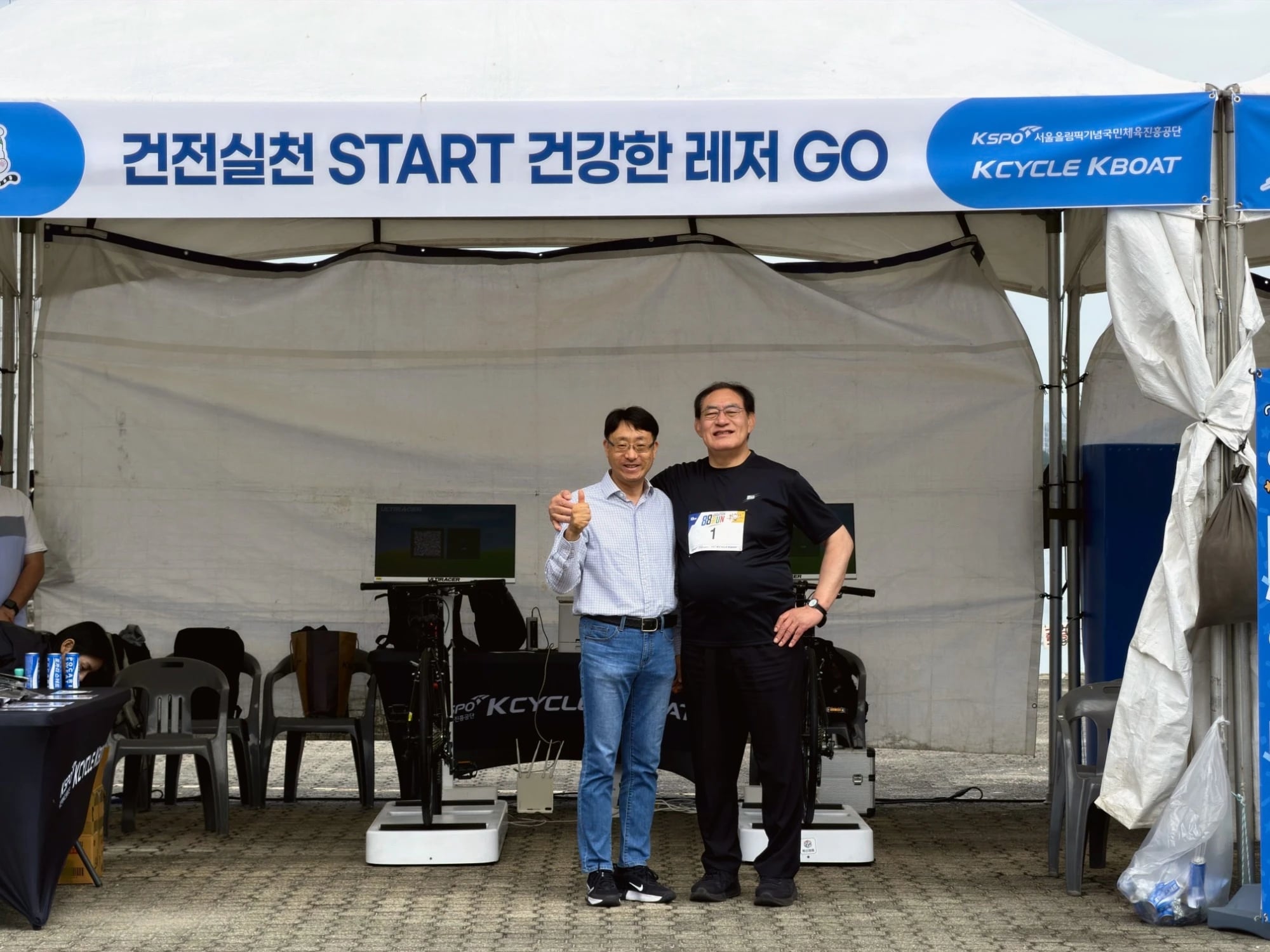
Among the visitors was KSPO Chairman Ha Hyung-joo himself. Wearing race bib No. 1, the 1984 Olympic judo champion stopped by the booth and posed with RealDesignTech CEO John Lee in front of the two bikes.
Our staff helped each rider onto the saddle, showed them where to look on the screen and stayed beside them for the whole ride.
Warm up before the start, cool down after the finish
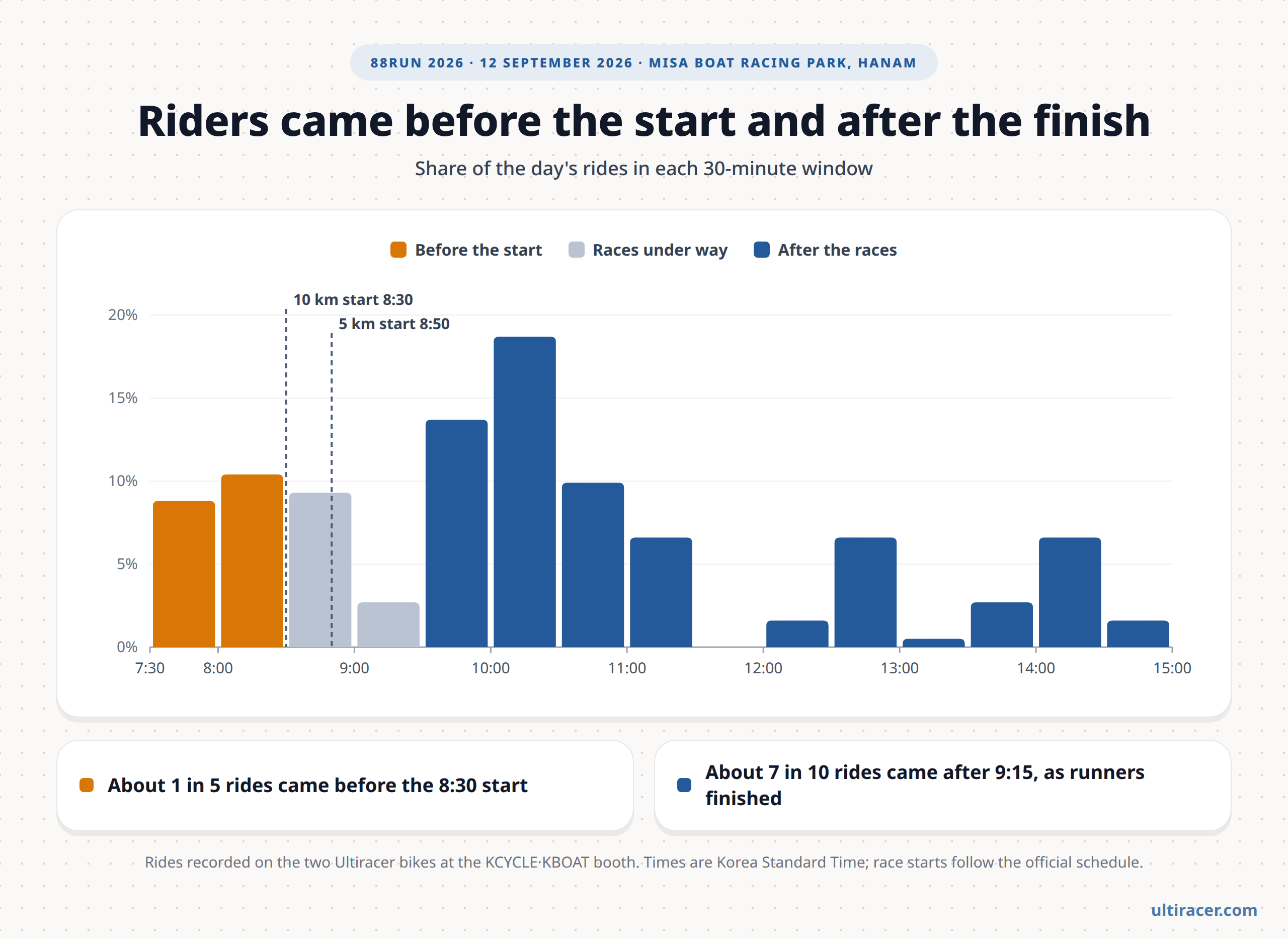
The first ride began at 7:41 a.m., just as the opening ceremony got under way. About one in five of the day's rides came before the 8:30 start, as runners loosened up, and about seven in ten came after 9:15, once finishers, families and friends returned from the course.
A few minutes of light cycling suits both ends of a run:
- Before: a warm-up gradually raises heart rate, breathing and muscle temperature. A review of 32 studies found that warming up improved performance in 79% of the outcomes examined, although the authors noted that few of the trials were high quality (Fradkin et al., 2010). Easy pedaling gets the legs moving without spending the energy needed for the race.
- After: a cool-down keeps you moving while heart rate and breathing settle. A review of the research found that active cool-downs clear lactate from the blood faster than resting still, but did little for next-day performance, soreness or injury risk (Van Hooren & Peake, 2018). So think of it as a gentle way to wind down, not a recovery cure.
- Easy on the joints: on a bike, the saddle carries your body weight and there is no landing. In distance running, the vertical force of each footstrike typically exceeds twice body weight (Cavanagh & Lafortune, 1980). When researchers measured forces inside instrumented knee implants, moderate ergometer cycling peaked at about 1.2 times body weight, lower than walking (Kutzner et al., 2012). That is one reason many runners use cycling as low-impact cross-training.
From running legs to cycling legs
Some visitors rode before their race and others straight after it, so they got a taste of something triathletes know well: the switch between running and cycling. The two movements ask different things of the same legs.
- Running is weight-bearing. With every stride, the legs catch the body's weight and spring back, so muscles and tendons work like springs, lengthening under load to brake each landing and then shortening to push off.
- Cycling is seated. The pedals move in a fixed circle and the muscles work by shortening as they push. One study comparing the two activities describes cycling as involving only these concentric contractions (Bijker et al., 2002), whereas running also brakes every landing with lengthening, eccentric actions.
Changing from one to the other means the nervous system has to swap one coordination pattern for another. Triathletes train the bike-to-run change with back-to-back "brick" sessions because the first minutes of running after cycling can feel heavy and awkward. In a review of the Olympic triathlon transition, running after cycling raised heart rate and breathing, and the energy cost of running rose by 1.6% to 11.6% depending on the athlete (Millet & Vleck, 2000). In a study of moderately trained triathletes, some athletes did not move the way they normally run when they first started running after cycling, even though their muscle recruitment barely changed (Bonacci et al., 2010).
Our riders who came straight off the course made the switch the other way. Legs that had just spent 5 or 10 km catching landings settled into a smooth, seated pedal stroke. On Ultiracer there is one more layer: the bike can sway and lean, so riders also had to steady it with their steering and body while their legs found the new rhythm. For many, a 30-second ride was a small taste of the transition that triathletes and duathletes practice.
Every age on the saddle
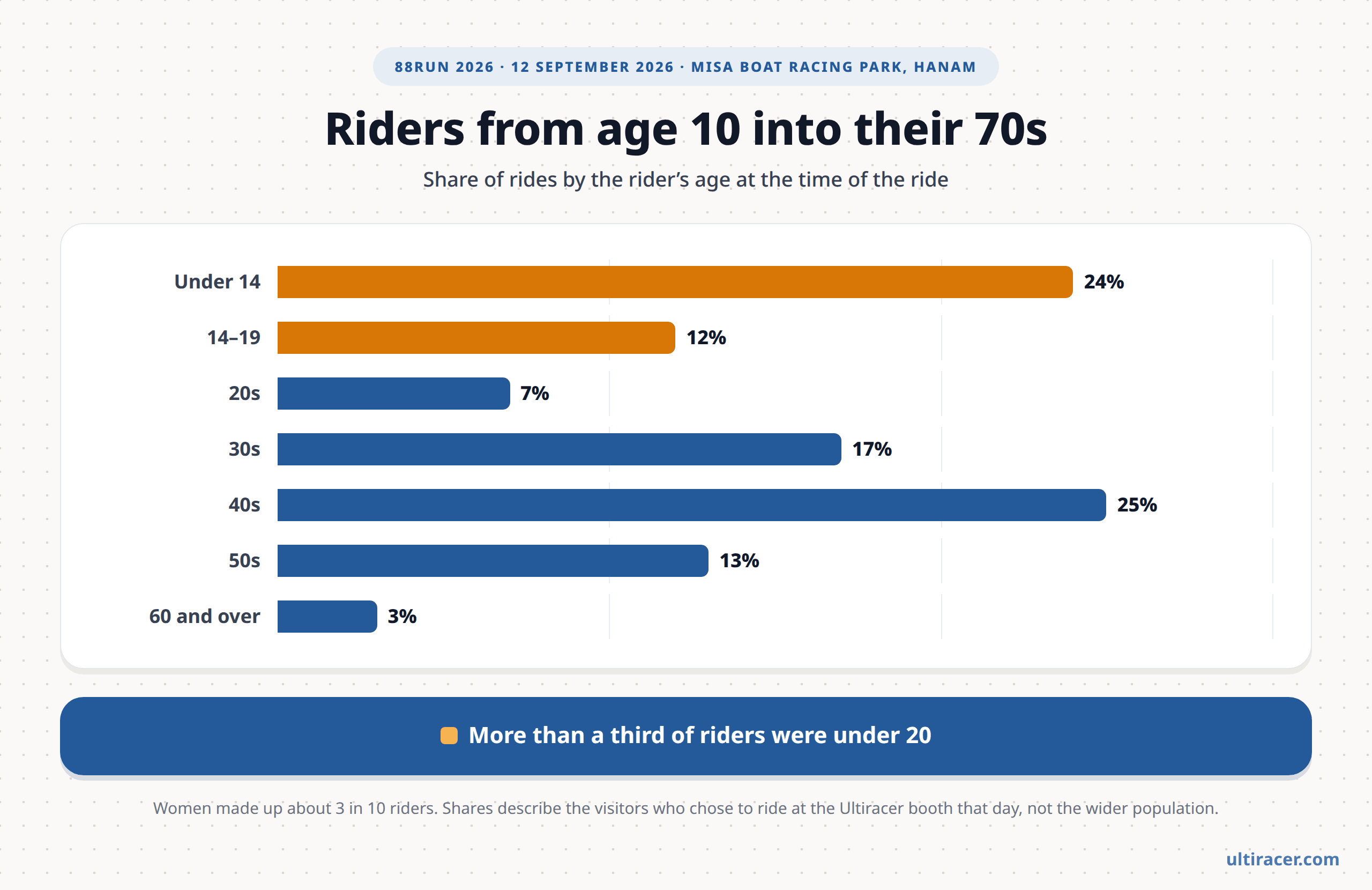
88RUN was built for families, and the booth showed it. Riders ranged from 10 years old into their 70s. Children under 14 made up about a quarter of the rides and teenagers about one in eight, so more than a third of riders were under 20. Riders in their 40s were the largest group, also about a quarter. Women made up about three in ten riders overall, and among riders in their 30s they outnumbered men. Children and teenagers rode beside adults, and runners still wearing their bibs shared the booth with the family members who had come to cheer them on.
Balancing a moving bike is a skill, and in this group it improved with age. Average Balance Quality rose from the low-to-mid 30s for riders under 20 and 44 in the 20s to 59 in the 30s, 63 in the 40s and 68 in the 50s. That echoes our analysis of more than 4,000 Perfect Racer rides, where riders aged 60 and over rode more steadily than riders in their 20s, 30s and 40s. Riders from their teens to their 50s scored a perfect 100. For the youngest riders, the fun was the point: a chance to steer a bike that leans like the real thing.
A note on these numbers: they come only from the visitors who chose to ride at the booth that day. They are not a representative sample of the wider population, so they show how this group rode, not how everyone of these ages rides.
Looking ahead
Running and cycling work well together. A few easy minutes on a bike can bookend a run, offer a low-impact option on easy days and, on Ultiracer, add a balance challenge that people of every age enjoy. 88RUN showed how naturally that fits into a running festival, and we look forward to more events where runners, families and first-time riders share the saddle.
Our sincere thanks go to KSPO's Cycle and Boat Racing Headquarters for hosting 88RUN and welcoming Ultiracer to the KCYCLE·KBOAT booth, and to every runner, parent and child who stepped up to ride.
Would you like to bring Ultiracer to your race, festival or center? Get in touch with us.