Five Days on Ultiracer: What a Kyung Hee University Validation Study Found in Older Adults
By Shaun Cheon
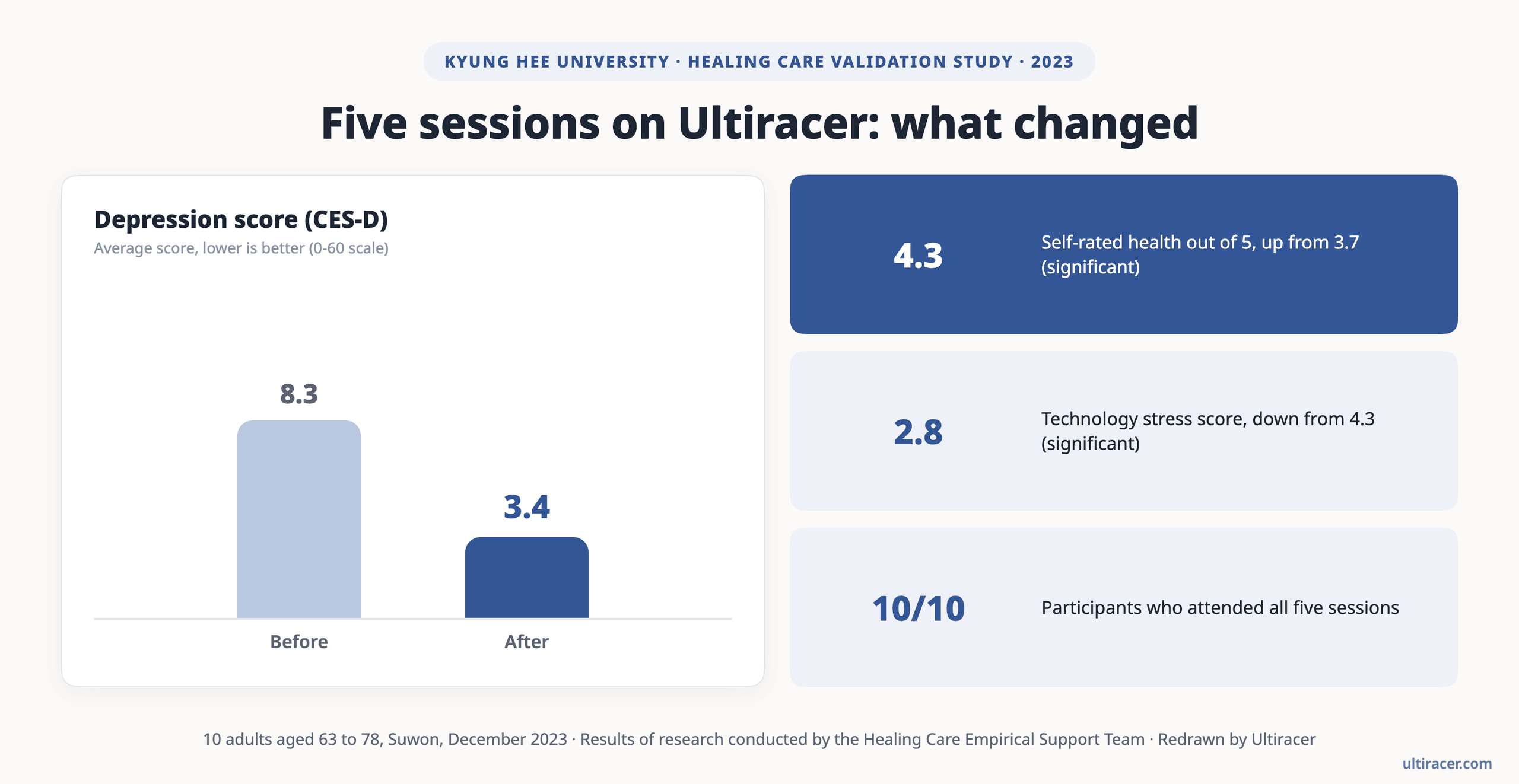
The short version: In December 2023, ten older adults aged 63 to 78 rode Ultiracer over five sessions as part of a validation study run by Kyung Hee University under Gyeonggi Province's Healing Care validation support project. Every participant completed all five sessions. Afterwards, their self-rated health rose from 3.7 to 4.3 out of 5, their scores on a standard depression questionnaire fell from 8.3 to 3.4, and the stress they felt about using the equipment dropped from 4.3 to 2.8. All three changes were statistically significant. The nine participants who completed the usability survey rated Ultiracer's stability during exercise 4.6 out of 5 and their overall satisfaction 4.7 out of 5, and every one of them said they would recommend it. Body composition and physical function scores did not change meaningfully over such a short period, and with only ten participants and no comparison group, this was a first feasibility check rather than proof of health benefits. But it was an independent evaluation of Ultiracer with the older adults we design for, and it showed that they could ride it comfortably, enjoyed it and felt more at ease with it after only a few sessions.
This article presents the results of research conducted by the Healing Care Empirical Support Team (Healing Care Empirical Support Team, 2023).
The program behind the study
Between 2020 and 2023, Gyeonggi Province and Korea's Ministry of Trade, Industry and Energy invested 14.1 billion won in a program to help companies test and validate "healing care" products and services, from exercise and food care to medical devices and beauty care. The program was led by the Gyeonggi Business & Science Accelerator (GBSA) and built four validation hubs with university and hospital partners. Kyung Hee University ran the hub for exercise and food care, its healthy aging validation center in Yongin. Over three years, the program carried out 56 validation and evaluation assessments (NS News, 2023).
Ultiracer's study was carried out for RealDesignTech as one of the program's validation support projects. Kyung Hee University's Industry-Academia Cooperation Office ran the study, with GBSA as the organizer. The final report, Demonstration of Senior Exercise Capacity and Function Improvement using the Balance Training Cycling System, was submitted on December 26, 2023 (Healing Care Empirical Support Team, 2023). We supplied the equipment; the research team carried out the measurements and the analysis.
Why test an indoor bike with older adults?
The report starts from a familiar problem. Many older adults don't get enough physical activity, and long periods of sitting are linked to muscle loss (sarcopenia) and frailty, which make everyday life harder. Exercise is one of the best tools for preventing both (Nascimento et al., 2019). The World Health Organization recommends that older adults do regular aerobic activity and also include balance and strength training on at least three days a week to help prevent falls (Bull et al., 2020).
Cycling fits that recommendation well, but for an older adult an ordinary bicycle can feel risky, and a stationary exercise bike offers no balance challenge at all. The research team noted that safety is crucial for any senior-friendly cycling device. Ultiracer is designed to sit between those two options: riders use a real bicycle on a platform that leans, sways and steers like a bike on the road, while its chassis control system is designed to anticipate and prevent falls. Interactive games on screen add a reason to keep pedaling. Research on exercise games for older adults suggests this combination can help: a 2020 meta-analysis of 12 randomized trials with 1,520 older adults found that exergames improved balance and mobility and helped keep people motivated to practice (Pacheco et al., 2020).
The question for this study was more basic: would older adults actually be able to use Ultiracer, would they like it, and would anything measurable change after a few sessions?
How the study worked
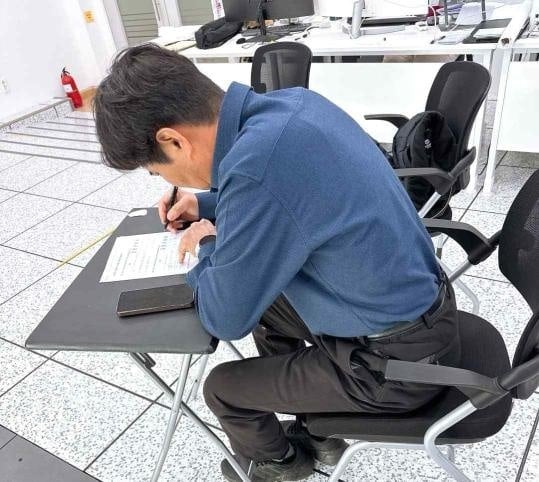
- Who: 10 adults aged 63 to 78 living in Suwon, Korea. Six were men and four were women; six were in their 60s and four in their 70s. Two lived alone, six with a spouse and two with a spouse and children.
- How much riding: five sessions in mid-December 2023, with one to three rides per session and each ride lasting at least six minutes. On average, participants rode about twice per session (2.0 to 2.3 rides). All ten attended all five sessions.
- What they rode: Ultiracer with three game programs: a road racing game, a fruit-catching game and a space shooter. The racing game was the most popular, so it was used for every session from the second one onwards.
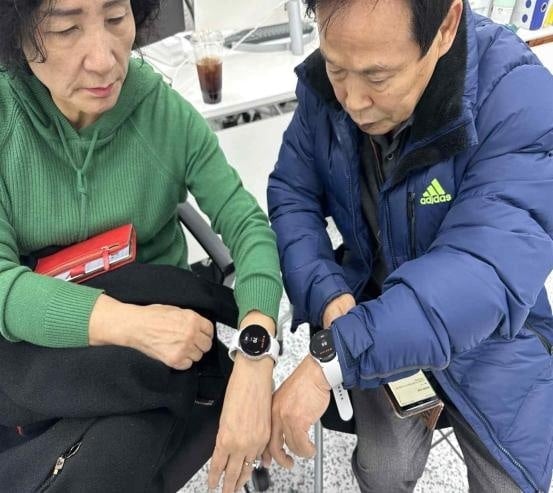
- Physical measures: body composition with an InBody S10 analyzer; physical function with the Short Physical Performance Battery (SPPB), a widely used test of balance, walking speed and standing up from a chair scored from 0 to 12 (Guralnik et al., 1994); and resting heart rate with a Galaxy Watch 4 smartwatch.
- Mental health measures: self-rated health on a 5-point scale; depressive symptoms with the CES-D, a 20-item questionnaire scored from 0 to 60 (Radloff, 1977); resilience with the Brief Resilience Scale (Smith et al., 2008); self-efficacy with the General Self-Efficacy Scale (Schwarzer & Jerusalem, 1995); and life satisfaction with the Satisfaction With Life Scale (Diener et al., 1985).
- Technology acceptance: attitudes, sense of control and technology-related stress, using items from the brief Senior Technology Acceptance Model questionnaire, which was developed to measure how ready older adults are to use new technology (Chen & Lou, 2020).
- Usability and intentions: face-to-face ratings of safety and satisfaction, intention to use Ultiracer again, buy it or rent it, and open-ended feedback.
- Analysis: before-and-after comparisons with paired t-tests.
What they found
Findings that were statistically significant
1. Self-rated health went up. Asked to rate their own health on a 5-point scale, participants averaged 3.70 before the program and 4.30 after it, a statistically significant improvement (p < .05). How people rate their own health matters: it is one of the simplest and most widely used measures of wellbeing in older adults.
2. Depressive symptoms went down. Average CES-D scores fell from 8.30 to 3.40, a statistically significant drop (p = .01). It is important to read this correctly. A score of 16 or more on the CES-D is the usual threshold for possible depression (Radloff, 1977), and this group was already well below it at the start. So this was an improvement in mood among people who were not depressed, not a treatment effect for depression. It is in line with wider evidence: in a meta-analysis of randomized trials in older adults with depression, exercise had a large effect on depressive symptoms (Schuch et al., 2016).
3. Technology stress fell. Many older adults feel anxious about unfamiliar equipment. Here, participants' technology stress score fell from 4.30 to 2.80 (p < .05). Agreement with the statement "I hesitate to use this device because I am afraid of making mistakes I can't correct" dropped from 2.20 to 1.40 (p < .05), and agreement with "I feel fear about using this device" fell from 2.10 to 1.40 (p < .10). In short, a few sessions were enough for the equipment to feel familiar rather than intimidating.
Findings that pointed the same way but were weaker
Two individual attitude items improved at a trend level (p < .10): "Using this device will make my life more efficient" rose from 3.70 to 4.40, and "I will be able to use this device proficiently" rose from 3.60 to 4.20. Overall attitude scores (11.5 to 13.1) and control scores (13.6 to 15.2) also rose, but these totals were not statistically significant.
What didn't change
Body composition. Basal metabolic rate, body mass index, skeletal muscle mass and protein stayed essentially the same. That is what you would expect: no exercise program changes body composition in five sessions, and the research team said a longer, consistent program would be needed to see such effects.
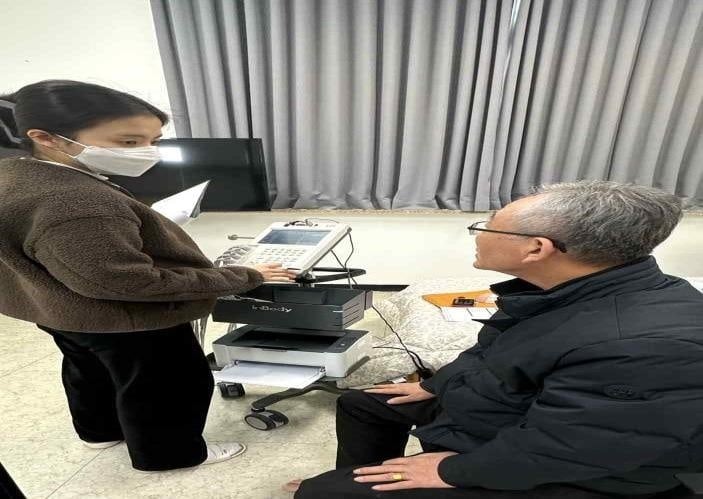
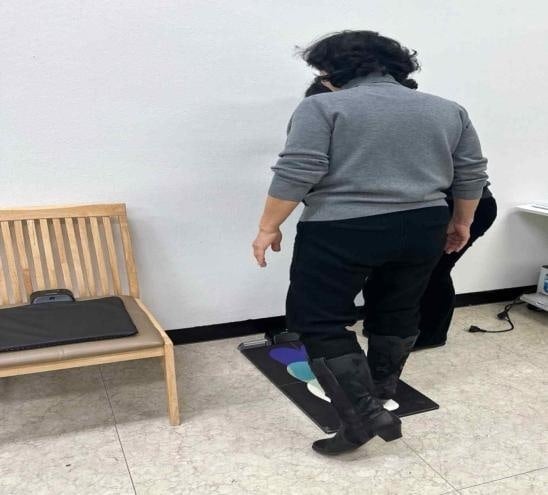
Physical function. Average SPPB scores went from 11.40 to 11.60, which was not statistically significant. Six of the ten already had the maximum score of 12 at the start, so there was very little room to improve; two participants moved up by one point.
Resilience, self-efficacy and life satisfaction. Scores stayed essentially the same (resilience 18.7 to 18.4, self-efficacy 29.4 to 29.7, life satisfaction 25.8 to 26.0).
Resting heart rate: an early signal, not a result
Resting heart rate, read from a smartwatch, averaged 75.3 beats per minute in the first session and gradually fell to 71.8 in the third and 71.4 in the fourth. The report gives a lower figure for the fifth session (64.7), but that average includes a single reading of 10 beats per minute, which can only be a recording error, so we don't rely on it. Leaving that reading out, the fifth-session average was about 71. The report did not test these changes statistically, and a few days of readings can't tell us anything about long-term heart health. The trend is still worth following in longer studies, because across large population studies every 10 beats per minute higher resting heart rate is associated with a 9% higher risk of death from any cause (Zhang et al., 2016).
How older riders rated Ultiracer
Nine participants completed the face-to-face usability survey.
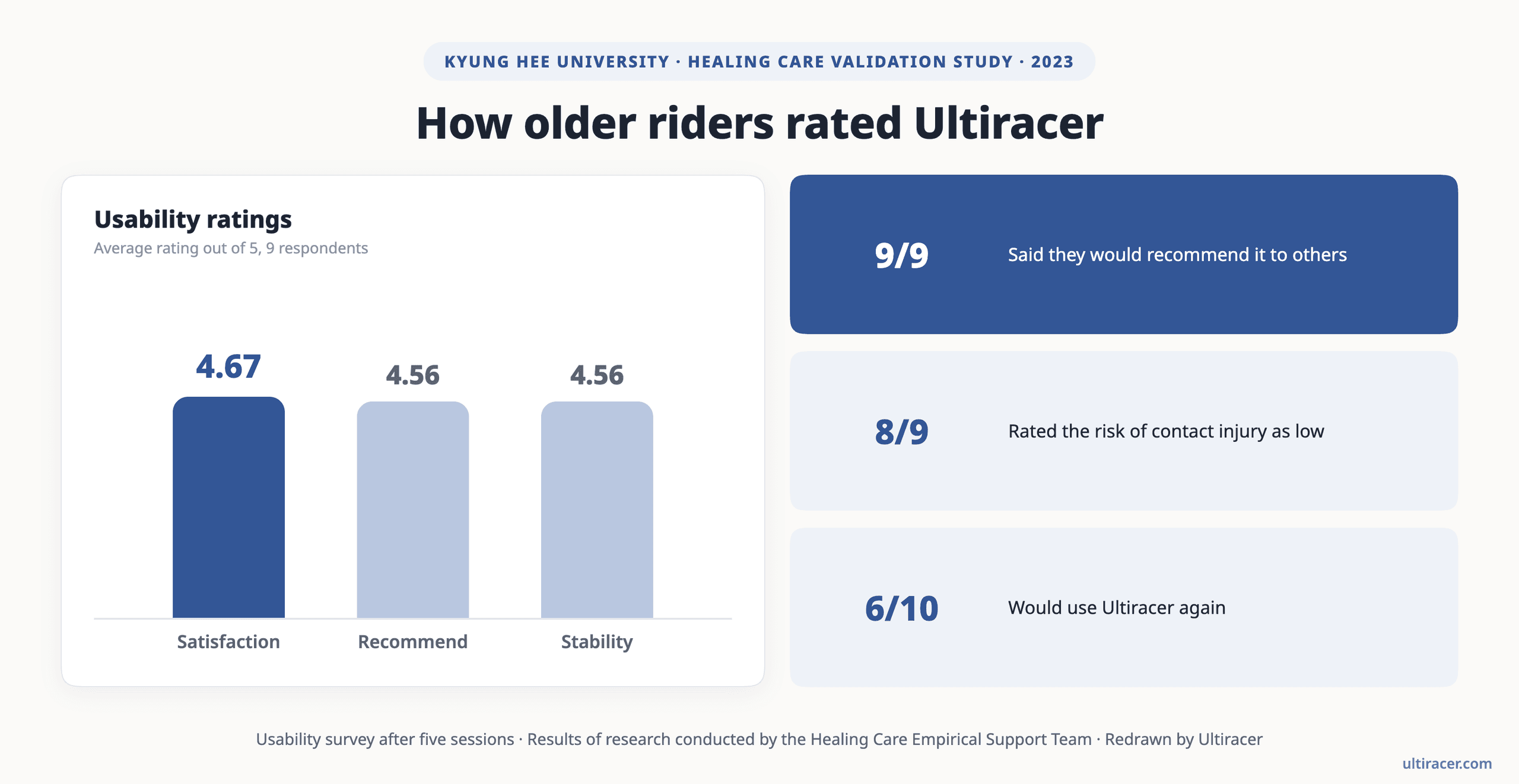
Safety. Stability during exercise averaged 4.56 out of 5: six participants rated it "very stable", two "stable" and one "average", so nobody rated it unstable. Stability when getting on and off also averaged 4.56. Eight of the nine rated the risk of getting caught or hurt by moving parts as low, and the exercise speed was rated 4.22 out of 5.
Satisfaction. Overall satisfaction averaged 4.67 out of 5, with six participants "very satisfied" and three "satisfied". Willingness to recommend Ultiracer to others averaged 4.56, and all nine said they would recommend it. Intention to keep using it averaged 4.33, and "it makes me want to exercise on my own" averaged 4.22, with every participant rating both at "average" or higher.
Would they use it again? Six of the ten participants said they would use Ultiracer again. Of those six, three said they would consider buying one and four would consider renting one.
What participants said
The report also collected open-ended feedback, which is often the most useful part of a validation study for the people who build the product.
What they liked. Participants enjoyed being able to exercise indoors and found riding a virtual bicycle fun and immersive. They appreciated that the seat height could be adjusted smoothly and that the handlebars turned smoothly. In the racing game, they found the on-screen map showing their position helpful and liked the variety of roads and the hills.
What could be better. Some found the saddle uncomfortable and the pedals a little stiff. A few felt slightly uneasy or had some difficulty getting on, and some found sudden sharp turns of the handlebars challenging. One participant suggested that the base holding the bicycle should adjust more flexibly to different bicycle sizes. For the game, participants asked for bigger and more frequent items, points for collecting items, spoken guidance ("You've arrived at your destination", "Careful on the downhill"), a display of the distance covered and more upbeat music.
How they felt. Participants said the riding worked their legs, that their thighs felt the effort and that they felt lighter and more relaxed afterwards. Some said it helped them find and keep their sense of balance, and several described a better mood and enjoying the exercise.
Keep the limits in mind
This was a small, short feasibility study. Ten people took part over five sessions, there was no comparison group that didn't ride, and the results are before-and-after changes within the same group. That means some of the improvements could reflect other factors, such as the social contact of taking part, attention from the research team or simply getting used to the questionnaires. The usability ratings and open-ended feedback came from participants who completed the program, and most participants were already in good physical shape, as their SPPB scores show. The study did not measure falls, strength or long-term health outcomes. The findings should be read as an encouraging first step that justifies larger and longer studies, not as proof that Ultiracer improves health.
Why this study matters to us
This study put Ultiracer in front of an independent research team and the older adults we design for, and it answered the questions that had to come first. Could older adults ride it comfortably? They rated it highly for stability, and nobody rated it unstable. Would they enjoy it? Satisfaction was high, everyone who completed the survey would recommend it, and all ten came back for every session. Would it feel intimidating? Technology stress fell after only a few rides.
It also gave us concrete feedback, from saddle comfort to voice guidance, from exactly the people we design for. Since then, researchers have gone on to study Ultiracer with people with Parkinson's disease, healthy older adults and cardiac rehabilitation patients. We call the combination of cycling, balance and focus behind all of this Neurocycling.
Bring safe, engaging riding to your center
If you run a senior welfare center, care home, day care center, rehab clinic or community wellness program, Ultiracer offers older adults a ride they can trust and enjoy. Get in touch with us to book a demo or discuss a research collaboration.
References
- Bull, F. C., Al-Ansari, S. S., Biddle, S., Borodulin, K., Buman, M. P., Cardon, G., Carty, C., Chaput, J.-P., Chastin, S., Chou, R., Dempsey, P. C., DiPietro, L., Ekelund, U., Firth, J., Friedenreich, C. M., Garcia, L., Gichu, M., Jago, R., Katzmarzyk, P. T., ... Willumsen, J. F. (2020). World Health Organization 2020 guidelines on physical activity and sedentary behaviour. British Journal of Sports Medicine, 54(24), 1451-1462. https://doi.org/10.1136/bjsports-2020-102955
- Chen, K., & Lou, V. W. Q. (2020). Measuring senior technology acceptance: Development of a brief, 14-item scale. Innovation in Aging, 4(3), igaa016. https://doi.org/10.1093/geroni/igaa016
- Diener, E., Emmons, R. A., Larsen, R. J., & Griffin, S. (1985). The Satisfaction With Life Scale. Journal of Personality Assessment, 49(1), 71-75. https://doi.org/10.1207/s15327752jpa4901_13
- Guralnik, J. M., Simonsick, E. M., Ferrucci, L., Glynn, R. J., Berkman, L. F., Blazer, D. G., Scherr, P. A., & Wallace, R. B. (1994). A short physical performance battery assessing lower extremity function: Association with self-reported disability and prediction of mortality and nursing home admission. Journal of Gerontology, 49(2), M85-M94. https://doi.org/10.1093/geronj/49.2.M85
- Healing Care Empirical Support Team. (2023). Demonstration of senior exercise capacity and function improvement using the balance training cycling system (Final report, Validation Test Support A-7). Gyeonggi Business & Science Accelerator; Industry-Academia Cooperation Office, Kyung Hee University.
- Nascimento, C. M., Ingles, M., Salvador-Pascual, A., Cominetti, M. R., Gomez-Cabrera, M. C., & Viña, J. (2019). Sarcopenia, frailty and their prevention by exercise. Free Radical Biology and Medicine, 132, 42-49. https://doi.org/10.1016/j.freeradbiomed.2018.08.035
- NS News. (2023, February 21). Gyeonggi Province builds four validation hubs and completes 56 evaluations through the Healing Care validation support project [in Korean]. https://newsseoul.co.kr/news/view/1065568814465982
- Pacheco, T. B. F., de Medeiros, C. S. P., de Oliveira, V. H. B., Vieira, E. R., & de Cavalcanti, F. A. C. (2020). Effectiveness of exergames for improving mobility and balance in older adults: A systematic review and meta-analysis. Systematic Reviews, 9, 163. https://doi.org/10.1186/s13643-020-01421-7
- Radloff, L. S. (1977). The CES-D Scale: A self-report depression scale for research in the general population. Applied Psychological Measurement, 1(3), 385-401. https://doi.org/10.1177/014662167700100306
- Schuch, F. B., Vancampfort, D., Rosenbaum, S., Richards, J., Ward, P. B., Veronese, N., Solmi, M., Cadore, E. L., & Stubbs, B. (2016). Exercise for depression in older adults: A meta-analysis of randomized controlled trials adjusting for publication bias. Revista Brasileira de Psiquiatria, 38(3), 247-254. https://doi.org/10.1590/1516-4446-2016-1915
- Schwarzer, R., & Jerusalem, M. (1995). Generalized Self-Efficacy scale. In J. Weinman, S. Wright, & M. Johnston (Eds.), Measures in health psychology: A user's portfolio. Causal and control beliefs (pp. 35-37). NFER-NELSON.
- Smith, B. W., Dalen, J., Wiggins, K., Tooley, E., Christopher, P., & Bernard, J. (2008). The brief resilience scale: Assessing the ability to bounce back. International Journal of Behavioral Medicine, 15(3), 194-200. https://doi.org/10.1080/10705500802222972
- Zhang, D., Shen, X., & Qi, X. (2016). Resting heart rate and all-cause and cardiovascular mortality in the general population: A meta-analysis. CMAJ, 188(3), E53-E63. https://doi.org/10.1503/cmaj.150535
This article presents the results of research conducted by the Healing Care Empirical Support Team, as part of the Data-Based Validation Support Platform Establishment Project for Healing Care Products and Services organized by the Gyeonggi Business & Science Accelerator.